Tech
Wired for Truth: The Rise of Investigative Tech Journalism in Bangladesh


Investigative journalism is the guardian angel of public interest—it digs deep, asks the uncomfortable questions, and pulls back the curtain on misdeeds. In Bangladesh’s tech and telecom sectors, where billions in public funds flow into infrastructure, procurement, and innovation, investigative ICT journalism becomes not just relevant—but vital. It’s the only line of defense against shady contracts, overpriced gadgets, and decisions that serve the powerful instead of the people.
At the center of this mission stands one relentless figure: Md. Mojahidul Islam, known to many as “Dheow.” A rare breed in the newsroom jungle, he’s not just another tech writer reviewing the latest gadgets—he’s the only investigative ICT journalist in Bangladesh with two decades of daring behind him. Fluent in both “geek” and “government,” he bridges the worlds of code and policy like no one else.
His story began in the late 1990s, when the concept of “digital Bangladesh” was still just a dream. In 1999, Mojahidul joined The New Nation as a part-time associate editor, just as the paper was launching a tech page. Then, in 2002, he led the launch of Online, the first weekly Bangla tech page in Ajker Kagoj. By 2003, he was Assistant Editor at E-Biz, rising quickly through the ranks to Acting Editor. In 2006, he joined The Daily Ittefaq, one of the country’s most respected newspapers, where he became the face of tech journalism, managing sections like Daily IT Corner, Education, Jobs, and Corporate. By 2009, he was officially crowned as Technology Editor.
But journalism isn’t his only arena—Mojahidul is also a prolific author of Bangla tech books. His writing demystifies the digital world for Bengali-speaking readers in Bangladesh and across West Bengal, India. His books are more than bestsellers—they’re tools of empowerment, translated into practical knowledge for students and tech lovers alike.
To sharpen his blade, Mojahidul has traveled the globe—receiving elite training in Artificial Intelligence, Internet Resource Management, and financial journalism. He earned a prestigious fellowship from the Thomson Reuters Foundation in London and continues to apply international insights to local issues.
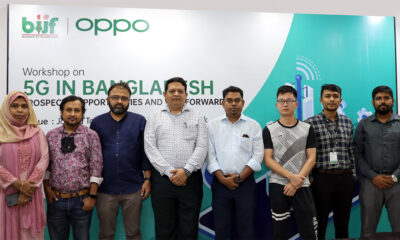
In 2007, he took on a leadership role as General Secretary of the Bangladesh ICT Journalists Forum (BIJF), the only organization of its kind. Through columns, roundtables, and relentless advocacy, he championed ICT awareness, government accountability, and journalists’ rights. In 2019, he was elected President of BIJF, becoming a vocal force for media freedom and journalistic protection.
Why did he choose tech journalism, especially when it was a road rarely traveled?
“In a country of 150 million Bangla speakers, I wanted to make technology accessible in our own language,” Mojahidul explains. Back in the early 2000s, English-language tech books were rare and elitist—available only in a few shops in Dhaka’s New Market. Most people thought computers were mysterious tools for scientists. But Mojahidul saw the future: he believed ICT would revolutionize education, agriculture, healthcare, and communication.
“So I picked up my pen,” he says. Even while juggling his studies in computer science, he began writing articles that resonated far and wide. Readers wrote back, hungry for more. Their curiosity fueled his passion.
In his own words: “Information and Communication Technology (ICT) is a powerful tool for human resource development and national progress.” He knew Bangladesh needed a digital awakening—and he intended to help spark it.
His most significant contributions, however, lie in tech investigative journalism.
In 2002, Bangladesh unveiled its first national ICT policy—a bold attempt to modernize government, empower youth, and digitize the future. Around that time, Mojahidul dropped a bombshell: an exposé that revealed the urgent need to computerize all government offices. The report sent ripples across ministries and helped spark actual reform.
That same year, the government launched the Support to ICT Programme (SICT) under the Planning Division, backed by over BDT 83 crore. Mojahidul published an in-depth report dissecting the project—highlighting risks, procurement flaws, and opportunities for improvement.
And did the government listen?
“Sometimes, yes,” he says. After his report exposing corruption in the procurement of 80,000 laptops, projectors, and network devices by the Ministry of Education, an investigative committee was formed. Some officials lost their jobs—others were quietly reinstated. But the mastermind behind the scam walked free, protected by political connections.
Another investigation into under-invoicing tech imports from Hong Kong—essentially tax evasion through smuggling—triggered policy-level discussions. Though action is slow, it’s coming.
Of course, none of this comes easy. Investigative tech journalism in Bangladesh is a high-stakes game. “If you just write about product launches, no one bothers you. But if you expose corruption, you face real pressure,” Mojahidul says. Still, he remains undeterred.
In recent years, new digital platforms have popped up, offering safe havens for hard-hitting stories. “It’s getting harder—but it’s also getting louder,” he believes.
For his courage, Md. Mojahidul Islam has earned a constellation of awards:
Pioneer IT Journalist of Bangladesh
Excellence in Technology Reporting
15 Years in ICT Journalism
Digital Bangladesh Award (2022)
Best Author Award
Prominent IT Journalist Award from the Ministry of ICT
His journalism doesn’t stop at exposure—it drives change. He demands accountability, ethics in tech procurement, and a future where public funds uplift citizens, not line private pockets.
Md. Mojahidul Islam isn’t just reporting the digital revolution—he’s making sure it stays honest.







Apple , opens new tab plans to spend more than $30 billion under a multi-year chip supply deal with Broadcom, bolstering its U.S. sourcing as President Donald Trump’s administration pushes to expand domestic chip manufacturing.
Broadcom shares rose more than 4%, while Apple shares were down marginally.
Apple said on Wednesday the deal, which was struck earlier this week and runs through 2031, covers FBAR filters – or radio-frequency chips used for wireless connectivity in its devices – that it had been developing with Broadcom since at least 2023.
Broadcom will invest $1.5 billion to expand its Fort Collins, Colorado, factory under the deal, which Apple said would result in the production of at least 15 billion chips and support its work with the Trump administration to source more components domestically.
“The cutting-edge components built in Fort Collins are essential to delivering the incredible performance and connectivity our customers expect, and we’re proud to deepen our investments in U.S.-based suppliers that share our commitment to excellence and innovation,” Apple CEO Tim Cook said in a statement.
“We’re grateful to the president and his administration for supporting important projects like this.”
In August 2025, Apple raised its U.S. investment commitment to $600 billion over four years, adding $100 billion to a previously announced spending plan.

China is planning to allow the country’s top AI companies to buy a limited number of Nvidia’s, opens new tab H200 chips, the Information reported on Wednesday, citing two people with direct knowledge of the matter.
Chinese officials have told Alibaba, opens new tab, ByteDance and DeepSeek in recent weeks that they may soon receive permission to buy some H200 chips, the report said.
Shares of Nvidia rose 1% after the report.
The chip giant did not immediately respond to a Reuters request for comment, nor did the U.S. commerce department, which oversees exports of advanced AI chips overseas.
China’s commerce ministry also did not immediately respond to a request for comment, while Alibaba, ByteDance and DeepSeek did not respond outside of regular business hours.
The U.S. government has allowed Nvidia to sell its advanced H200 chips to China, and licensed about 10 Chinese firms to buy the chips. However, Chinese officials, keen to nurture domestic suppliers, have withheld approval so far.
Reuters reported in March that Nvidia had won Beijing’s approval to sell the chips to China, citing sources, and around the same time, Nvidia CEO Jensen Huang also told CNBC that the company had clearance from China.
Beijing is still determining the exact number of Nvidia chips to approve, and it could amount to fewer than 200,000 in total, the Information said, adding that was less than half of what the companies requested earlier this year.
Last month, Reuters exclusively reported that Nvidia told Chinese clients its new “Vera” central processors for AI data centres could be available as soon as August and that they can begin placing orders.
Nvidia’s market share in China has effectively fallen to zero, Huang said in October, hurt by U.S. export controls and Beijing’s push for self-reliance in key technologies.
The potential shift in China’s stance underscores the growing computing capacity crunch that the country’s tech companies are facing.

A team of software testers found that Australian social media platforms did not request age proof for any of 50 accounts that declared themselves to be 16, a result that leaves the country’s world-first under-16 ban “ineffective” at the most basic screening stage, according to a study seen by Reuters.
Since December, platforms such as Instagram, Snapchat and YouTube have been required to bar people under 16 and take “reasonable steps” to verify age, with regulators recommending multiple layered checks. But the new research, conducted by those who advised the nationwide curb, shows that the initial vetting step, which estimates a user’s age from general online activity, is failing to flag young people for tougher verification.
The testers, who last year trialled age-assurance software on more than 1,000 Australians, opened 50 new accounts after the law took effect and set the age as 16. None of the platforms asked for additional proof, the researchers told Reuters. The findings highlight a flaw that has been largely overlooked while public debate has focused on photo-based age-estimation tools.
The ban’s rollout has been widely criticised after surveys indicated that most under-16s still access the platforms. The government last month doubled the maximum fine and warned of possible court action against tech giants, accusing them of setting the system up to fail. Platforms have countered that they are simply following the regulator’s guidance, which prioritises low-friction checks and prevents reliance on government ID alone due to privacy concerns.
Some advisers to the original trial said they had repeatedly warned that the testing process ignored real-world circumvention, including minors entering false birthdates. “We did want to talk about circumvention, but we kept on being told that that wasn’t part of the actual trial,” Colm Gannon of the International Centre for Missing & Exploited Children told Reuters. A youth digital rights academic involved in a longer-term study of the ban said more impressive results might emerge once platforms move to age-inference methods later in the year. The regulator maintains that the recommended layered approach, if implemented correctly, ensures no single point of failure.

Two US soccer team staff members suspended by FIFA for Belgium World Cup game

Inside the Haaland machine

‘Little disappointed in our batting unit’: Miraz rues Tigers’ ODI opener defeat against Zimbabwe