World
Russian attacks kill 4 across Ukraine, striking Kyiv for second straight day

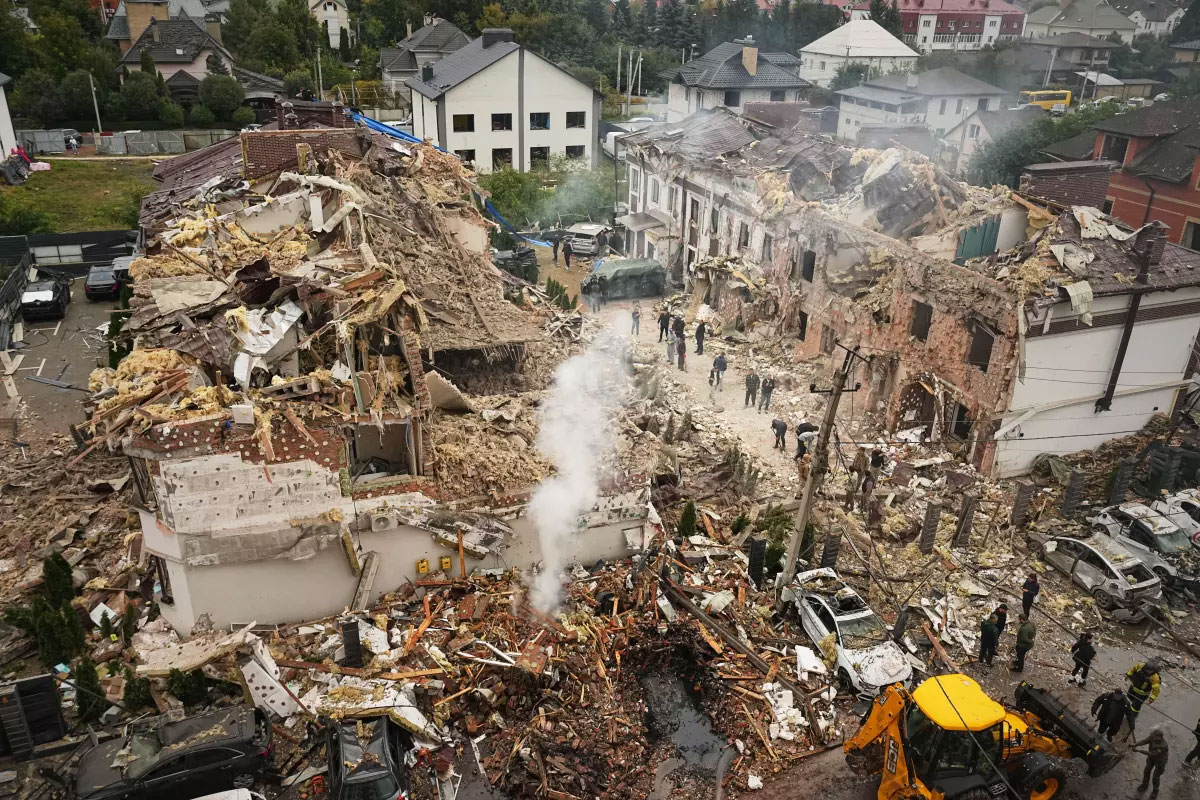
Russian drones and missiles killed four people across Ukraine on Wednesday in attacks before dawn and at midday, as Moscow kept up its pressure on the capital of Kyiv in the latest phase of the over 4-year-old war.
Ukraine struck oil refineries in Russia’s Saratov and Tatarstan regions, according to President Volodymyr Zelenskyy, who met with U.S. President Donald Trump on the sidelines of the NATO summit in Turkey. Trump said the U.S. would give a license to Ukraine so it could manufacture Patriot air defense systems to counter Russia.
Russia attacks Kyiv, hours apart
In Kyiv, several explosions were heard shortly after midnight, even before authorities could issue an alert to give civilians time to find shelter.
The early morning Russian attacks killed one woman and injured two others in Kyiv, according to city administration head Tymur Tkachenko. The State Emergency Service said the attack damaged several administrative buildings and warehouses, as well as a garage complex and several trams.
Hours later, another Russian drone struck Kyiv’s Desnianskyi district, killing a second person and injuring six others, Tkachenko said. A total of eight people were injured in the attacks on the capital.
In Kharkiv, two people were killed and 20 others were injured in a series of overnight strikes, according to Mayor Ihor Terekhov. In Zaporizhzhia, a Russian guided bomb injured two people Tuesday night, regional head Ivan Fedorov said.
Ukraine’s air force says Russia fired 169 long-range strike drones and seven missiles, including five ballistic missiles. Air defenses shot down or jammed 139 drones, and two anti-radar missiles didn’t reach their targets, it said.
All five ballistic missiles and 20 drones struck targets at 15 locations, the air force said, underscoring the continued strain on Ukraine’s air defenses.
Russia’s Defense Ministry said it struck an arms industry facilities in Kyiv, hitting a plant that manufactured components for Flamingo cruise missiles and a facility assembling mid- and long-range drones.
Trump cites a better relationship with Zelenskyy
In Ankara, Trump said the U.S. will give a license to Ukraine to manufacture Patriot air defense systems to defend against Russian missile attacks like those that have been striking Kyiv in recent weeks.
It would be a huge coup for Ukraine, which badly needs the systems that are expensive, in high demand and take a long time to produce. Zelenskyy long has been asking for more Patriot systems, as well as the license to produce them.
“We’ll give them the right to make Patriots. We’ll show them how to do it,” Trump said, sitting next to Zelenskyy. “I think they can produce them pretty quickly.”
The tone of their meeting was a markedly different from an earlier, acrimonious encounter at the White House in February 2025 when Trump berated Zelenskyy. On Wednesday, he praised the Ukrainian leader’s willingness to reach a deal to ending the war, saying he has “done an amazing job” and “been very effective.”
“We’ve actually developed a good relationship. It’s hard to believe,” Trump said, adding he believed a deal on ending the war was on the horizon and that the U.S. would “work on some kind of security package” for Ukraine.
Zelenskyy thanked Trump for his support and said he wanted to discuss weapons supplies, possible peace negotiations and a developing drone deal.
“Air defense is the priority,” Zelenskyy said, adding that Kyiv wanted to share details of its needs under the Prioritized Ukraine Requirements List, or PURL, in which European allies and Canada are buying American weapons to help his country.
Zelenskyy also said Ukrainian and U.S. officials had begun work on a drone deal, calling it “a very good beginning.”
Trump was expected to have another call with Putin following his meeting with Zelenskyy.
Ukraine hits Russian oil and gas facilities
The ministry also said air defenses downed 415 Ukrainian drones from late Tuesday to early Wednesday. Gov. Roman Busargin of Russia’s Saratov region said a Ukrainian drone attack killed one person, injured several others and damaged industrial facilities.
Zelenskyy said Ukraine’s long-range attacks reached the Saratov, Tatarstan and Bashkortostan regions deep inside Russia, as well as the Voronezh region, closer to the border. The strikes hit refineries in Saratov and Tatarstan, the latest energy facilities struck by Ukraine that have worsened fuel shortages across Russia.
In the Tatarstan region, Nizhhnekamsk Mayor Radmir Belyayev said Ukrainian drones damaged industrial facilities in the city and injured several people. Belyayev didn’t identify the damaged facilities.
Sergei Aksyonov, the Moscow-installed head of the Crimean Peninsula that was illegally annexed by Russia in 2014, said restrictions on civilian fuel sales would continue and that gasoline would not be available “on certain days.”
Aksyonov said many of the decisions being made to resolve the crisis could not be disclosed publicly, adding that he was giving regular updates to Russian President Vladimir Putin.
“The fuel supply situation remains strained and will continue to be so for some time,” he said. “We are monitoring this issue closely in coordination with the federal government and are working on a solution.”
Following a meeting with Putin, Deputy Prime Minister Alexander Novak announced all diesel exports will be halted until the end of July as Russia grapples with fuel shortages. Similar export bans are already in place for gasoline and jet fuel.
Putin told the meeting that Ukraine’s attacks on energy infrastructure was an attempt to provoke anxiety and damage the economy -– goals he described as “unachievable.”
Russia’s Gazprom state-controlled gas company said Ukrainian drones attacked the Krasnodarskaya compressor station serving the Blue Stream natural gas pipeline to Turkey late Tuesday. It said the attack was intended to derail Russian gas shipments to Turkey, but there was no disruption of supplies.
Kremlin spokesman Dmitry Peskov called it another “dangerous” attack against “the critical international energy system” and voiced hope that Turkey and other nations would warn Kyiv against such action.
Rostov regional Gov. Yuri Slyusar said Ukrainian drones damaged two oil tankers in Taganrog Bay, injuring two crew members. The crew of one of the ships had to be evacuated.
He said there was no oil spill because the tankers heading to the port of Rostov-on-Don were empty.










World
Funeral processions held in holy Iraqi cities for Iran’s late Supreme Leader Ayatollah Ali Khamenei
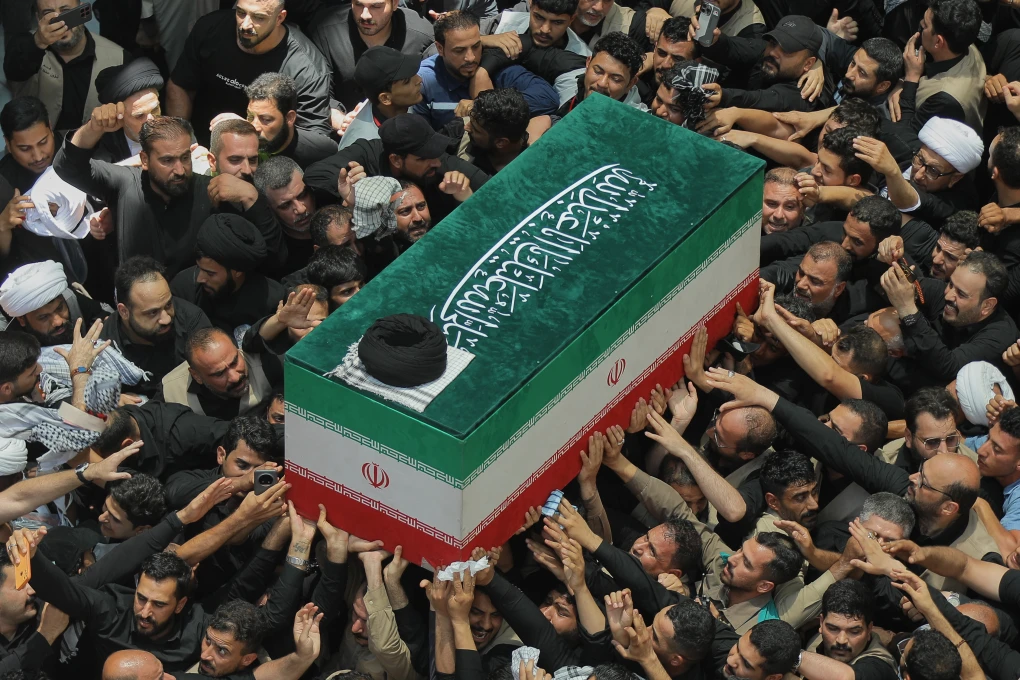
Thousands of mourners attended funeral processions for Iran’s Ayatollah Ali Khamenei on Wednesday in the holy Iraqi cities of Najaf and Karbala as part of dayslong funeral ceremonies for the Islamic Republic’s late supreme leader.
The ceremonies began on Saturday, with authorities shutting down streets, airspace and daily life in Tehran, Iran’s capital, as throngs commemorated the life of the man who led Iran for decades with an iron fist while confronting the West. His body was later taken from Najaf to Karbala before it is to be returned to Iran.
Khamenei was killed in late February in wide-scale U.S. and Israeli strikes on Iran that started the war. The 86-year-old supreme leader was among several senior Iranian leaders killed in strikes during the war.
Talks on ending the war between the United States and Iran appear to be on hold until after the burial.
However, strikes from both sides in the Persian Gulf on Tuesday and into Wednesday raised risks that the interim agreement to end the monthslong conflict that engulfed the Middle East could completely break down.
The U.S. military attacked Iran early Wednesday after it said Tehran struck three ships in the Strait of Hormuz. Iran then launched retaliatory strikes on Kuwait and Bahrain.
Khamenei’s body arrived on Tuesday in Najaf, considered one of the holiest of cities for millions of Shiite Muslims worldwide. Mourners holding portraits of Khamenei welcomed the body and senior officials escorting it, including Iranian President Masoud Pezeshkian and Foreign Minister Abbas Araghchi.
The body was placed in a casket draped in the Islamic Republic’s flag and encased in glass.
Some supporters performed self-flagellation on the streets, while others waved Iranian as well as red and black flags symbolizing mourning and revenge.
Muhammad Taqi al-Hakim, a senior scholar at the Najaf seminary, led the funeral prayers at the Shrine of Imam Ali, the Prophet Muhammad’s cousin and son-in-law.
As the coffin was carried into the shrine, large crowds pushed and shoved their way to get close to it. Some threw themselves onto the casket, as attendants struggled to control the crowd, urging the pallbearers to carry it closer to the ground for fear it might fall.
“We, the people of Iraq, will remain a thorn in the eyes of the enemies,” said Jaafar Jawad, a funeral attendee. “(His body arriving here) is the greatest possible honor, and God willing, we will be loyal and repay a little of his debt in the holy city of Najaf.”
Sign up for Morning Wire: Our flagship newsletter breaks down the biggest
The body later arrived in Karbala, also a holy city for Shiites, where Imam Hussein, the grandson of the prophet, was killed in 680 AD. Thousands of supporters gathered in the desert heat in and around the shrine while Abdul Mahdi al-Karbalaei, a representative of Iraq’s top Shiite religious authority, led the prayers there.
Iran’s new supreme leader, Ayatollah Mojtaba Khamenei, has yet to make an appearance at the funeral ceremonies, which are unfolding over several days. He is believed to be in hiding after reportedly being wounded in the airstrike that killed his father.
They called themselves the “German driving school for experts,” but prosecutors say the true purpose of their Telegram chats was to brag about the women they raped and share tips about how to drug them.
In posts that sometimes included photos and videos of their attacks on unconscious victims, they referred to women as “cars,” sedatives as “fuel” and rape as “driving,” according to court documents. They called their victims “dead pigs.”
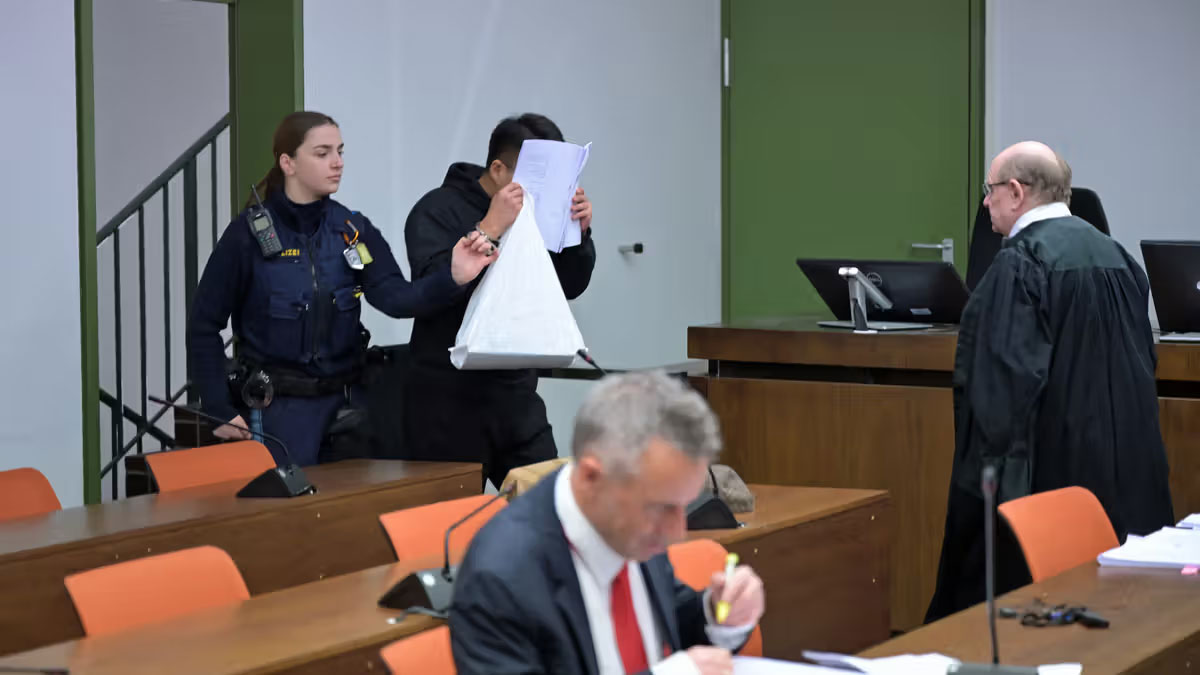
Investigators have been poring through several years’ worth of posts in roughly two dozen group chats on the popular messaging app that authorities believe served an online predator network of mainly Chinese men targeting mostly Chinese women in Germany. Their investigation has already led to the convictions of three alleged inner circle members on rape and other charges. A fourth was convicted Wednesday in Berlin.
Predator network’s coded language
A group calling itself a “German driving school for experts” in chat groups on Telegram used code words when discussing drugging and sexually abusing women, according to prosecutors. Some of the terms used:
| “Gas station” | A place where drugs could be obtained |
|---|---|
| “Fuel” or “oil” | Sedatives |
| “Filling up” | Drugging victims |
| “Driving” | Sexually assaulting a sedated victim |
| “Luxury car” | An attractive woman |
| “Wild cars” | Strangers |
| “Private cars” | Girlfriends |
| “Dead pig” | An unconscious woman |
| “Half-dead pig” | A partially-conscious woman |

Major details of the investigation remain unknown, at least to the public, including how many attacks and perpetrators have been linked to the German Telegram chats and how the chats, some of which reportedly had tens of thousands of members, could have operated for so long. It’s also unclear if the chats are linked to a ballooning investigation in Europe and the Americas into drug-facilitated sexual assaults by misogynist online communities.
Chinese community rallies to support the victims
Under German privacy laws, prosecutors are limited in what they can say outside the courtroom, documents are restricted and, in the ongoing case in Berlin, members of the public have been forced to leave the courtroom during parts of the trial.
This may be why the investigation into the Telegram group has garnered less attention in Germany than might be expected. But members of the country’s Chinese community, mostly women, have been attending court proceedings to show support for the victims even if they don’t know them.
“What makes one really angry is to see that such groups hate women, they have no respect,” said Fu Xiao, who traveled roughly 500 kilometers (310 miles) to Berlin last week to attend the trial. “Women aren’t seen as people.”
In China, state media has covered the cases comprehensively, but wider discussion about the prosecutions on Chinese-language social media like Rednote has been partially censored. Certain tags have been more likely to get a post deleted or banned on Rednote, screenshots and searches show. But posts using less direct language have survived the censors, including ones that refer to “date rape” or the euphemistic “students studying abroad in Germany.”
China’s Ministry of Public Security and Rednote didn’t respond to requests for comment.
Cases echo a landmark French trial
The German cases have drawn comparisons to the attacks on Gisèle Pelicot, a French woman who, over the course of nearly a decade, was repeatedly drugged and raped by her then-husband and strangers he invited to their home. The trial — and Pelicot’s decision to waive her anonymity — prompted a reckoning over rape culture in France and beyond.
“Pelicot is not an isolated case,” Judge Markus Koppenleitner said during a hearing in Munich for one of the Chinese men convicted in the German investigation. “This is not a Chinese or French phenomenon, but one that also exists in Germany and, ultimately, worldwide.”
Similar cases to the “German driving school” investigation have been popping up around the globe. Although authorities haven’t publicly linked them to the German prosecutions, some investigators have cited tips from German authorities and journalists as crucial to their progress.
In Los Angeles, German investigators last year reached out to police about a potential suspect in drug-facilitated sexual assaults. The defendant, a graduate student from China, is accused of drugging and sexually assaulting three women in LA after he allegedly procured the drugs from a Chinese national in Germany.
In the Netherlands last month, police arrested four men suspected of drugging and sexually abusing women after hearing from authorities in Germany and the U.K. Dutch police said the alleged perpetrators used social media chat groups to disseminate videos showing the abuse and discuss how to drug victims.
And Europol, the European Union’s police agency, last week announced “Project Medusa,” an international operation designed to dismantle online networks that promote drug-facilitated sexual assaults. Law enforcement from Germany and the U.K. are leading the operation, which has already netted 57 arrests.
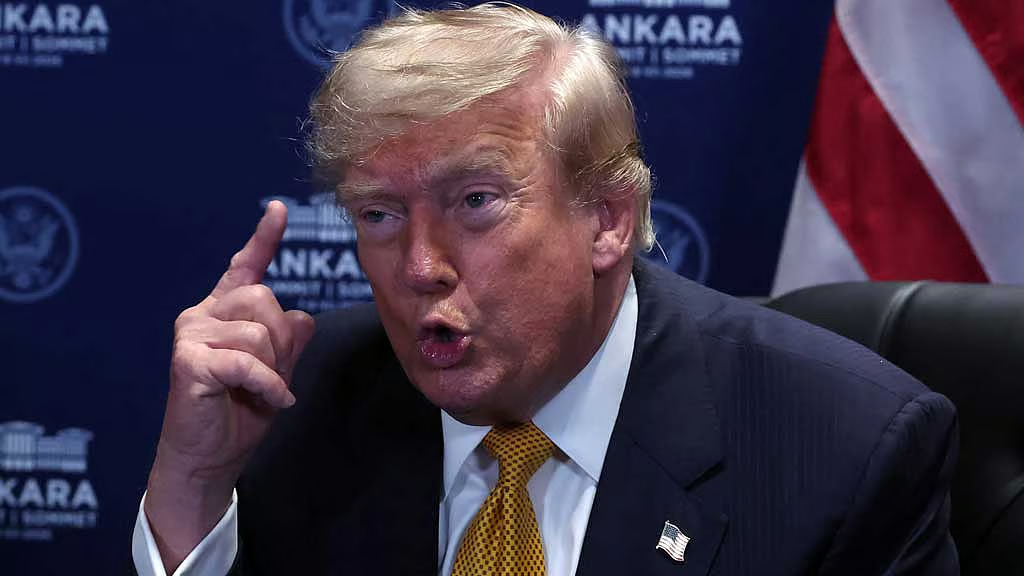
President Donald Trump said an interim agreement to end the war with Iran was “over” and that the United States was likely to launch new strikes on Wednesday night following Iranian attacks on US bases in the Gulf.
In a flare-up of hostilities that pushed up oil prices, Iran said on Wednesday it had targeted US military sites in Bahrain and Kuwait after US forces struck Iranian targets in response to attacks on tankers in the Strait of Hormuz.
The attacks further undermined a shaky ceasefire agreement and dented hopes of turning the memorandum of understanding signed on Jun 17 into a permanent peace deal to end the war, which began with US-Israeli airstrikes on Iran on Feb 28.
“If we make a deal with Iran I’m not sure that will stick,” Trump said, “because I found them to be very dishonourable people.”
But Trump did not explicitly say Washington would return to full-fledged war and it was not immediately clear whether or not the negotiations on reaching a permanent deal would continue.
Oil Prices Rise, Stocks Fall
Asked before a NATO summit in Turkey whether the memorandum of understanding was over, Trump said: “It’s a very interesting question. To me, I think it’s over. I don’t want to deal with them.”
“They’re scum. They’re sick people. They’re led by sick people,” he told reporters in Ankara.
“As far as I’m concerned, it’s just a waste of time dealing with them,” he said, before adding: “Now, I’ll let our wonderful negotiators keep talking if they want, but I don’t see it. I don’t like these people, you know that.”
A source familiar with the Ankara talks said Trump did not repeat his comments about the interim deal being over when NATO leaders met at the summit, but the president later warned of new strikes in comments to reporters.
“I’ll give a little warning: We’re going to hit them hard tonight,” Trump said before a meeting with Ukrainian President Volodymyr Zelenskiy.
The latest attacks have heightened safety and security concerns around the Strait of Hormuz, with shipping data showing at least four oil and gas tankers had turned back rather than try to transit the waterway, a vital supply route.
Trump has at times stepped back from threats he has made against Iran, but oil prices jumped and global bond markets tumbled. Brent crude futures LCOc1 leapt more than 5%, the most in a day since late May, to $78.48 a barrel O/R.
While that was far below the peaks above $120 seen during the height of the fighting, it was enough to inject some fresh inflation risk into the bond market, particularly since months of conflict have drawn down global oil inventories.
Wall Street’s main indexes were set to open lower.
Iran and US Trade Blame
Iran’s Revolutionary Guards (IRGC) said they had targeted US military sites in Bahrain and Kuwait and that they had shot down a US MQ-9 drone attempting to interfere in the operation.
Bahrain’s army later said it had thwarted Iranian attacks.
The US had earlier unleashed new military strikes and revoked a licence allowing Iran to sell oil in response to attacks on three tankers in the strait.
The US Central Command said more than 60 small boats used by the IRGC were among the targets hit in an operation it said was intended to impose a heavy cost on Iran for strikes on shipping in violation of the ceasefire.
Trump said the US had “knocked out 28 boats last night” and would probably hit more later.
NATO Secretary General Mark Rutte told reporters before the NATO summit that the new attacks by the US on Iran were “absolutely necessary”.
EU foreign policy chief Kaja Kallas later said on X the exchanges of fire “complicate already fraught talks to end the war. Iran’s attacks on Bahrain and Kuwait are unacceptable.”
Iran’s top joint military command, Khatam al-Anbiya Central Headquarters, called the US strikes a “blatant act of aggression,” threatened a “crushing response,” and warned that Tehran would not allow US interference in the management of the strait.
A top Iranian negotiator, parliament speaker Mohammad Baqer Qalibaf, accused the US of breaching the ceasefire agreement.
“The era of bullying and extortion is over,” Qalibaf said in a post on X. “We don’t fold.”
Iranian media earlier reported explosions in Iran’s main oil hub of Kharg Island, on Qeshm Island and in the southern port cities of Sirik and Bandar Abbas. CENTCOM made no mention of Kharg Island, from which Iran exports 90% of its crude oil.
A US official told Reuters that strikes targeted Iranian air defence systems, coastal surveillance systems, surface-to-air missiles, anti-ship cruise missiles and drone launch sites.
No civilian deaths were reported in Iran.
Iran Seeks to Leverage Control of Strait
Control of the Strait of Hormuz has given Tehran immense leverage, effectively allowing it to force a stalemate with the world’s most powerful military.
Analysts say Tehran uses attacks on ships to underscore that leverage as it negotiates a long-term peace deal with the US
Under the interim US-Iran agreement, the US Treasury issued a Jun 22 general licence to allow the sale of crude oil and petrochemical and petroleum products of Iranian origin through Aug 21. In revoking that licence on Tuesday, it gave Iran until Jul 17 to wind down any transactions.
Iran’s foreign ministry condemned the move as a breach of the framework agreement to end the war. The ministry said Iran would take any measure it deemed necessary to safeguard its interests and national security.

Two US soccer team staff members suspended by FIFA for Belgium World Cup game

Inside the Haaland machine

‘Little disappointed in our batting unit’: Miraz rues Tigers’ ODI opener defeat against Zimbabwe