Sports
‘Little disappointed in our batting unit’: Miraz rues Tigers’ ODI opener defeat against Zimbabwe

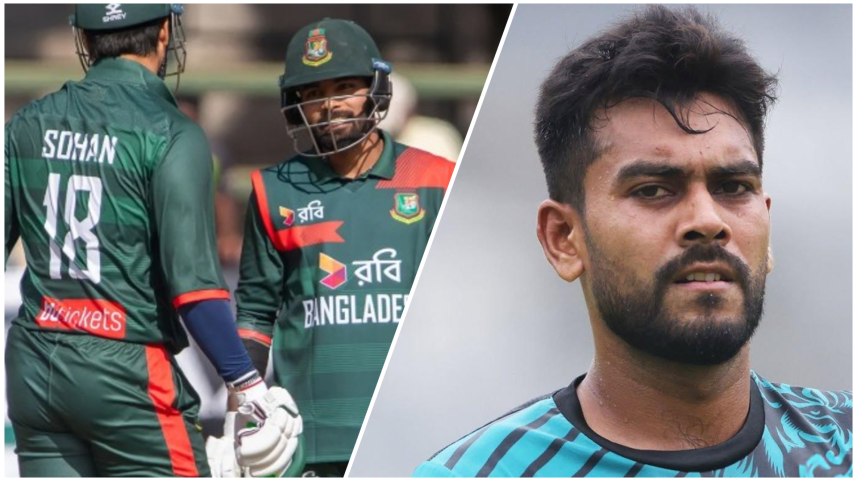
Bangladesh captain Mehidy Hasan Miraz admitted he was “a little disappointed” with his side’s batting after the Tigers slipped to a 25-run defeat in the first ODI against Zimbabwe in Harare on Monday, squandering a record-breaking bowling performance from Nahid Rana.
Nahid produced the best bowling figures by a Bangladesh bowler in ODI history, returning 6 for 21 to bowl Zimbabwe out for 141. However, Bangladesh crumbled for 116 in reply, with another batting collapse reminiscent of their struggles in the one-off Test.
“We bowled really well, especially Nahid. He took six wickets and it was exceptional,” Miraz said at the post-match presentation. “They got a partnership (between Richard Ngarava and Newman Nyamhuri), and those were crucial runs. Little disappointed in our batting unit.”
Nahid surpassed the previous Bangladesh ODI record of 6 for 26, jointly held by Mashrafe Bin Mortaza and Rubel Hossain. Mashrafe achieved the feat against Kenya in Nairobi in 2006, while Rubel matched it against New Zealand in Mirpur in 2013.
Zimbabwe looked set for an even lower total after slumping to 70 for eight, but a vital 63-run stand between Ngarava (27)and Nyamhuri (33) lifted the hosts to 141.
Bangladesh’s top order failed to mount any meaningful resistance in the chase. Only Towhid Hridoy (25 off 58) and Nurul Hasan (31 off 44) crossed 20 as Ngarava and Brad Evans claimed three wickets each, while Blessing Muzarabani and Nyamhuri picked up two apiece.
Miraz felt Bangladesh could also have done more to prevent Zimbabwe’s lower order from adding valuable runs.
“The last few series, the way he [Nahid] has been bowling, it has been excellent. We can do better, but we have to bowl in the right areas. Both batters played really well during that partnership,” he said.
Reflecting on the top-order collapse, Miraz added: “If you get a partnership in the first 10 overs, it would have been better, but we did not get it.”



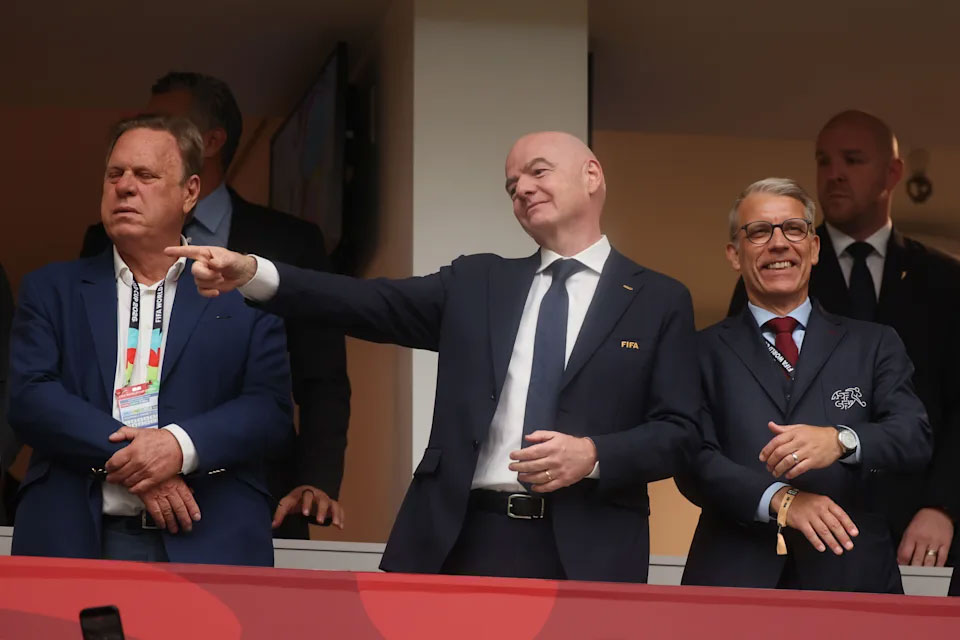
Two staff members of the U.S. soccer team were suspended by FIFA from Monday’s round of 16 game against Belgium.
FIFA did not explain why it imposed the discipline on team manager Sam Zapatka and U.S. Soccer Federation vice president of security Frank Pannell.
The USSF did not give a reason Tuesday other than to say it was not related to the successful effort to have forward Folarin Balogun’s one-game, red-card suspension lifted.
Zapatka has been the team’s administrative manager since 2020 and has worked for the USSF since 2015.
The U.S. was eliminated from the World Cup with a 4-1 loss to Belgium.

The 2026 World Cup has already seen global icons shine in abundance alongside the sudden emergence of breakout stars, and the name standing tallest in the latter category belongs to Erling Haaland.
The towering striker scripted history by guiding Norway into the World Cup quarterfinals, culminating in Monday’s sensational 2-1 triumph over powerhouse Brazil. With his decisive brace against the Selecao, Haaland joined Lionel Messi and Kylian Mbappe at the top of the Golden Boot standings with seven goals.
Haaland’s astonishing success is not merely a product of raw talent; it is the result of relentless discipline. The modern superstar places a meticulous emphasis on recovery, nutrition, and quality sleep. His famous 6,000-calorie daily diet is double that of an average person, focusing entirely on clean, whole foods like raw milk, eggs, steak, and honey — supplemented by his preferred energy sources: cow hearts and livers.
Yet, despite this seemingly strict regime, there is still room for comfort. The forward recently confessed a deep love for Indian cuisine, proving that even a scoring machine has his vices.
That uncompromising lifestyle has earned him nicknames like “The Viking” and “The Android,” reflecting his devastating strength and consistency. However, his goal celebrations are often stoic, shwocasing a grounded mentality.
His approach to physical recovery is equally intense: a £50,000 home cryotherapy chamber, routine ice baths, red-light therapy, daily physiotherapy, and meditation. Even his sleep schedule is unyielding — in bed early, screens completely blacked out, and blue-light blocking glasses firmly on.
On the grass, he has quickly become the ultimate symbol of a rising Norwegian side, pulling worldwide attention from hardcore purists and casual fans alike. But off the pitch, a completely different narrative emerges.
Away from the stadium lights, Haaland is a rare luxury-bag enthusiast who approaches pop culture with a hilarious detachment. During a Formula 1 weekend in Monaco, he accidentally left Hollywood actor Tom Holland on read after being invited to dinner — simply because the striker had no idea who the Spider-Man star was.
His offbeat charm was further encapsulated in Nike’s pre-tournament campaign, “Rip the Script,” where a viral sequence featured actor Channing Tatum dressing up as the Norwegian’s literal twin.
That public adoration has followed the team all the way to their tournament camp in Texas. Embracing the Lone Star State, Haaland’s first recreational stop was Six Flags Over Texas in Arlington, where he posted snippets to Snapchat while taking turns on iconic rollercoasters.
He followed that up with a trip to Wild Bill’s Western Store in the historic West End of downtown Dallas. Treating his millions of followers to a digital shopping trip, the six-feet five-inch forward proudly rocked a black t-shirt reading: “Y’all Can Kiss My Dallas.”
For most athletes, excellence on the field is what drives digital engagement. But in Haaland’s unique case, performance and personality actively feed into one another. His goals keep him squarely in the limelight, but his unfiltered social media presence shows just how large that spotlight has truly become.
Sports
World Cup quarterfinals: It’s Messi, Morocco, and 6 teams from Europe. And that’s not unusual
This edition started with 48 teams; it’s now down to eight, with six of those from Europe. And unless Morocco pulls off a series of surprising outcomes over the final two weeks, the champion will come from Europe or South America.
Again. As always.
A tournament that has been around for nearly a century — the first World Cup was in 1930 — has been contested on 22 previous occasions. The champions: 12 from Europe, 10 from South America, zero from the rest of the globe combined.
This year’s quarterfinal lineup: six from Europe, one from South America, one from Africa. Not exactly a history-bucking set of outcomes there.
That said, it seems like even some of Europe’s best players are surprised at how well this World Cup has gone.
“I thought it was not possible to do some things,” Norway star Erling Haaland said after his two goals helped his team beat Brazil for a spot in the quarterfinals — the first time his nation has gone this deep in a World Cup. “I guess I’m wrong.”
He was wrong in a good way. The tournament hosts were wrong in a not-so-good way.
North America had three cracks at breaking through this year in a bigger-than-ever, 48-team World Cup with the U.S., Mexico and Canada all co-hosts.
None of those teams even made the quarterfinals.
“We need to get over that next hurdle,” U.S. star Christian Pulisic said in a televised interview after the Americans were ousted by Belgium in the round of 16, a lopsided 4-1 defeat that shows how far North America still has to go. “Trying to compete and beat the world’s best, that’s our next step … There’s still another step that we have to take.”
The three hosts all got through the group stage and the round of 32 with ease. The U.S., Mexico and Canada had a combined 9-2-1 record in those matches, outscoring opponents by a total of 20 goals. Things looked promising, to say the least.
Then came the round of 16. Thud.
England ousted Mexico 3-2, the U.S. got rolled by Belgium in a match that looked one-sided from the outset and Canada was outclassed in a 3-0 loss to Morocco. Combined numbers from that trio of matches: 0-3-0 record, outscored by seven goals.
“Levels,” French soccer legend Thierry Henry said in his role as an analyst on Fox after the U.S. defeat. “The World Cup is different in the group stage. Round of 32 never existed before. Everyone made history in the round of 32. It never existed before … Unfortunately, one host, two hosts, three hosts, out. That’s exactly what you don’t want at a World Cup. That is annoying for me.”
If it annoys Henry, imagine how it feels for the Canadians, Mexicans and Americans.
There hasn’t been a CONCACAF — the Confederation of North, Central America and Caribbean Association Football — team in the World Cup quarterfinals since Costa Rica in 2014.
Before that, it was the U.S. in 2002 in its best showing at the World Cup since finishing third in 1930. Canada has never been past the round of 16. Mexico has played in each of the last nine World Cups; it reached the round of 16 in eight of those, never going further in that span.
“Everyone gave everything,” Mexico midfielder Erik Lira said. “But, in the end, it wasn’t enough.”
That seems to be an every-four-years refrain for every place other than Europe and South America.
There was some diversity in the makeup of the 2002 World Cup quarterfinal field with five confederations — Europe, South America, Asia, Africa and North America — all represented that year.
It was a rare blip. Of the 48 available quarterfinal spots over the six World Cups since, Europe has claimed 30, South America 14, Africa three and North America one.
Morocco is carrying Africa’s hopes now and that continent came out of the group stage looking poised for a breakthrough. It sent 10 teams to the tournament; nine made it into the round of 32.
And then, most of the teams saw their hopes end by surrendering late goals.
Ivory Coast, South Africa and Congo all surrendered decisive goals in the 86th minute or later of what became their exits from the knockout phase. Cape Verde’s magical ride ended after giving up an own goal to Lionel Messi and defending champion Argentina in the 111th minute. And for Senegal and Egypt, the endings were particularly harsh — both led 2-0 late in the second half, then fell by 3-2 scores to Belgium and Argentina, respectively.
Egypt felt the match was stolen by officiating decisions.
“Perhaps they wanted to keep the world champion in the competition,” Egypt coach Hossam Hassan said. “Perhaps they wanted Messi to stay in the competition.”
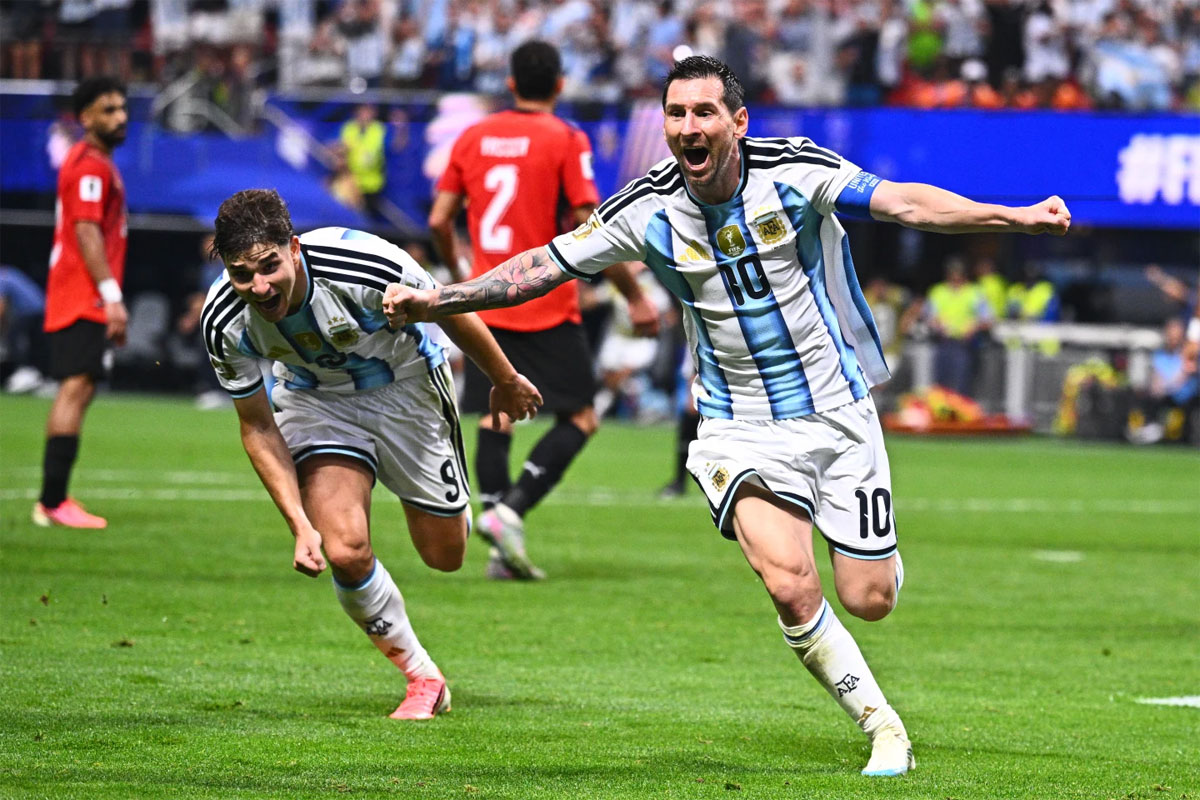
The counterpoint to that was how, once again, a powerhouse like Argentina found a way. For the fifth time in the last six World Cups, Messi’s team is in the quarterfinals.
Some things just don’t seem to change.
“It wasn’t easy to come back from a 2-0 deficit in a World Cup knockout match — especially given how games are going these days, where no one gives you anything for free,” Messi said. “But thank God, we did it once again.”

Two US soccer team staff members suspended by FIFA for Belgium World Cup game

Inside the Haaland machine

‘Little disappointed in our batting unit’: Miraz rues Tigers’ ODI opener defeat against Zimbabwe