Politics
PM urges all parties to participate in national polls


Awami League President and Prime Minister Sheikh Hasina today called upon all political parties of the country, including BNP, to participate in the upcoming national election, saying that BNP should take part in the upcoming parliamentary polls seeking apology to the nation for committing crimes and arson terrorism.
“The door of election is open to all,” she said while delivering her opening speech at the first meeting of Bangladesh Awami League’s Election Steering Committee at the party’s Dhaka district office at Tejgaon in the city.
Mentioning that election schedule has been announced, Sheikh Hasina said, “Everyone should come and participate in the election. (All should) go to the people and seek vote for them.”
About the BNP-Jamaat, especially killing people and causing loss of lives and properties through arson violence and torching vehicles by them, she said, “They (BNP-Jamaat) should seek apology to the nation for their crimes and then take part in the 12th national parliamentary election.”
Sheikh Hasina, also the Chairman of Awami League’s Election Steering Committee, thanked the Election Commission for announcing the election schedule in time following the rules, not getting afraid of the arson violence.
She sought cooperation from the people of the country so that the election can be held in a fair manner on time.
This election is for ensuring the voting rights of the people and formation of a government of their choice, she said, adding, “You, cast vote (in the election) with the slogan – ‘I will cast my vote for whoever I want.”
Pointing at the youth society, Sheikh Hasina said her government has made Digital Bangladesh and now everyone is getting its benefits. Now her government is on an endeavour to make the country as Smart Bangladesh in future. “We hope that we would get their (youth folk) cooperation (to do so),” she said.
She questioned why the people will go to vote for those who killed and plan to kill the common people and why the people will keep trust in them.
The people don’t trust them as they are identified as killers and conspirators, she added.
Noting that election is the right of the people and it is their constitutional right, she said time has come for election and the people will vote.
“If anyone has the courage, they will run in the election,” she said, adding that if they have public support, they will get mandate.
The Awami League president said the party which is elected by the people in the voting will form the government. They (BNP-Jamaat) are carrying out attacks on the people failing to keep trust in them, she added.
Mentioning that Awami League government has been running the country with specific plans and economic policy assuming office since 2009, the Prime Minister said that grassroots people are the centre of her government’s development plan.
“We’ve been successfully able to bring a radical change in Bangladesh in the last 15 years,” she said, adding that her government has gained public trust and confidence by serving the people since 2009.
She continued: “Since we’ve served the people and ensured their rights, today the people have trust and confidence in the Awami League and us.”
Criticizing the Israel bombing attacks on Palestine hospital, particularly women and children, the Awami League President said her government sent a good amount of medicines and other necessary items for the Palestinian.
Without mentioning the name of BNP and Jamaat, she in this context blasted the parties for not protesting Israel’s repression on the Palestinians.
She went on: “It’s unfortunate that we hear anything from the parties who kill people resorting to arson violence in this country and grab power illegally. They say nothing.”
In the context of the politics of Bangladesh, the premier noted that now the extreme rightist and extreme leftist parties have joined hands to overthrow her government.
“Now, it is a question who has deviated from its ideology,” she said, adding that now the extreme leftists have no ideology anymore.
The Awami League Chief questioned: “What is our fault that our government would have to be toppled?”
Citing that BNP and its alliance have again started the arson violence, she said, “The people of this Bangladesh will never accept the game with fire.”
“Actually, they (BNP) wanted to spoil the election. But, they won’t be able to thwart this election,” she added.
Terming BNP a headless party, she said since convicted Khaleda Zia and Tarique Zia can’t run the election, they don’t want to join the polls, rather they want to thwart the election.
Criticising vandalism in the garment sector, Sheikh Hasina said no government other than Awami League did anything to raise salary of garment workers in the country.
She said her government has now increased the minimum monthly wage to Taka 12,500, which is a 56 percent hike, while the workers get a 5 percent increment in their salary annually. “Even then we’ve witnessed 18-19 factories were vandalized,” she added.









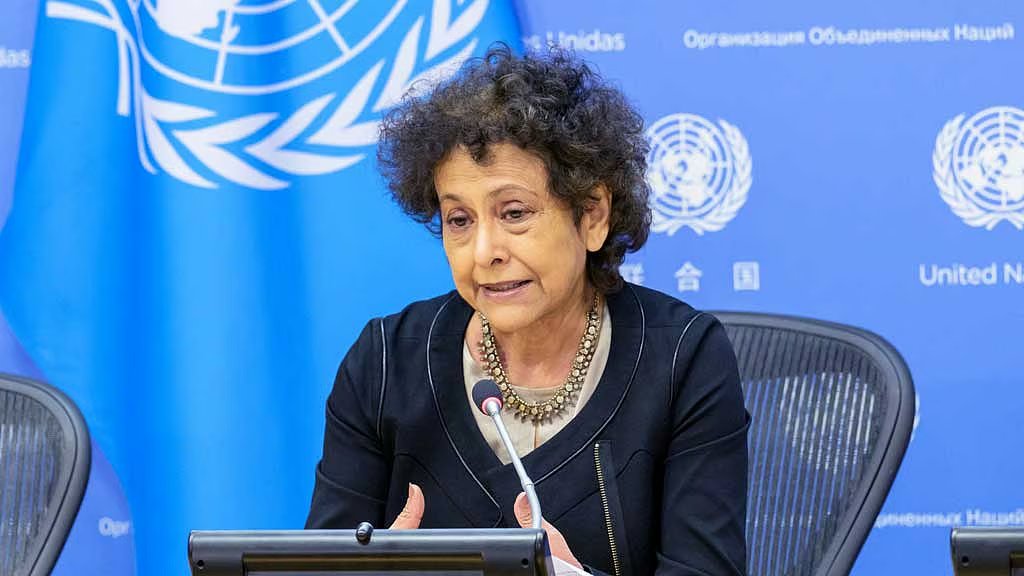
The government has appointed internationally renowned human rights advocate Irene Khan as Bangladesh’s permanent representative to the United Nations, granting her the rank of state minister.
The Cabinet Division issued a gazette notification on Wednesday confirming her contractual appointment.
According to the notification, Irene Khan will receive the rank, salary, allowances and other benefits of a state minister while serving as Bangladesh’s permanent representative and ambassador to the UN.
She will succeed Salahuddin Noman Chowdhury, the current permanent representative to Bangladesh’s UN Mission. Foreign ministry officials said Chowdhury is set to become the country’s next foreign secretary.
Khan has served as the UN Special Rapporteur on the promotion and protection of the right to freedom of opinion and expression since Aug 1, 2020, becoming the first woman to hold the mandate since it was established in 1993.
An internationally recognised advocate for human rights, gender equality and social justice, she also teaches at the Graduate Institute of International and Development Studies in Geneva.
She was secretary general of London-based Amnesty International from 2001 to 2009, becoming the first woman to lead the global human rights organisation. During her tenure, Amnesty expanded its work on economic, social and cultural rights alongside political and civil rights, and launched its first global campaign to end violence against women and girls.
From 2012 to 2019, Khan headed the International Development Law Organization (IDLO), an intergovernmental organisation dedicated to the rule of law and sustainable development.
She previously served as a visiting professor at the State University of New York Law School in 2011 and as chancellor of the University of Salford in the United Kingdom from 2009 to 2015.
Khan began her professional career with the UN High Commissioner for Refugees (UNHCR), where she worked for 21 years in headquarters and field operations, including as chief of mission in India.
She has also served on the World Bank Gender Advisory Council, the UNAIDS High Level Panel on HIV Prevention and Human Rights, and the UN Global Compact Advisory Council. She has been a governing board member of the Overseas Development Institute in the UK, BRAC and Uganda-based Barefoot Law.
Born in Bangladesh, Khan studied at University of Manchester and Harvard Law School. She has received several international honours, including the Sydney Peace Prize, for her contribution to human rights.
Bangladesh
Bangladesh extends curbs on govt-funded foreign travel, tightens rules on official vehicle purchases
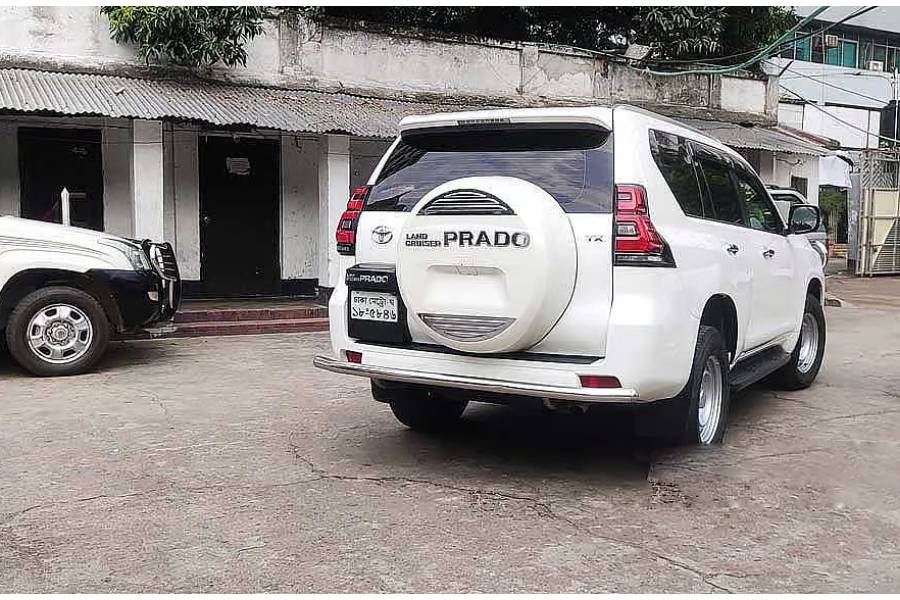
The government has extended restrictions on government-funded overseas travel for public officials in the ongoing fiscal year and tightened rules on the purchase of official vehicles as part of efforts to reduce public expenditure.
The Finance Division issued a notification on Wednesday saying the measures are aimed at ensuring the proper use of limited public resources, bringing inflation to a tolerable level and maintaining macroeconomic stability.
Under the directive, government officials and employees will continue to be barred from attending seminars, symposiums and workshops abroad at government expense.
The notification also imposes stricter controls on the purchase of vehicles under both development and operational budgets.
Only vehicles included in the approved Table of Organisation and Equipment (TO&E) that are more than 10 years old may be replaced, it said.
New government institutions will require prior approval from the Finance Division before purchasing TO&E-listed vehicles.
The Finance Division also instructed all government agencies to suspend expenditure from all types of block allocations.
Funding for the purchase of all categories of vehicles, including motor vehicles, watercraft and aircraft, has also been halted.
However, vehicles used for transporting personnel rather than for personal use may be replaced if they are more than a decade old.
Newly established government institutions may also procure such vehicles only with Finance Division approval.
The notification also states that, except for ambulances and vehicles used for security purposes, all replacement or newly purchased government cars and jeeps must be fully electric.
The government said the measures are intended to curb operational spending while supporting broader efforts to maintain fiscal discipline and economic stability.
Environment
Sovereign guarantees limit renegotiation of private power plant contracts: power minister
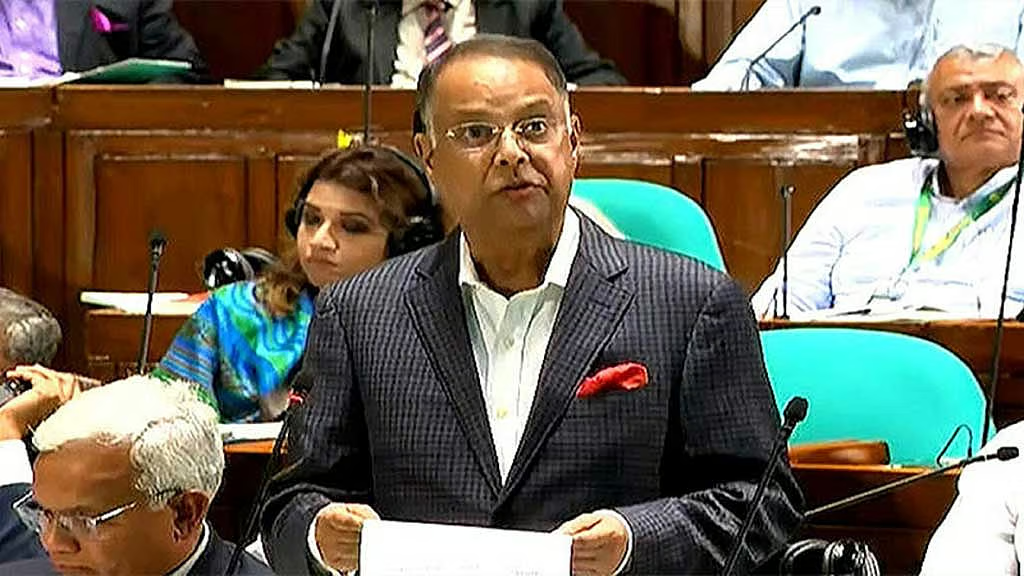
Power Minister Iqbal Hassan Mahmood has said the government’s ability to renegotiate costs, including capacity charges, under contracts signed with private power plants by the previous administration is limited because those agreements carry sovereign guarantees.
However, he told parliament on Wednesday that the government is negotiating with power producers to eliminate late payment fees on overdue bills.
The minister made the remarks while responding to a supplementary question from Jamaat lawmaker Mardia Mumtaz during the parliamentary session.
Mardia asked whether the government had a concrete plan to reduce capacity charges, which account for a significant share of electricity subsidies and overall power sector costs despite recent tariff increases.
In reply, Iqbal said the previous government had provided sovereign guarantees in contracts with private power companies.
“A sovereign guarantee is a guarantee by the state. Cancelling such guarantees requires a legal process that takes considerable time,” he said.

Two US soccer team staff members suspended by FIFA for Belgium World Cup game

Inside the Haaland machine

‘Little disappointed in our batting unit’: Miraz rues Tigers’ ODI opener defeat against Zimbabwe