Bangladesh
Data Breaches Expose Millions, Reveal Gaps in Bangladesh’s Privacy Law


Bangladesh’s growing digital infrastructure has come under renewed scrutiny following a series of major data breaches that exposed the personal information of millions of citizens and highlighted serious weaknesses in the country’s new data protection law.
On August 19, 2025, hackers breached Shwapno’s customer database, stealing 410 gigabytes of data, including the names, phone numbers and purchase histories of nearly 40 lakh registered customers. The attackers demanded a $1.5 million ransom, which the retailer refused to pay. Although the company strengthened its systems, it did not notify affected customers. The breach only became public in March 2026 after the stolen data appeared on the dark web, with news spreading on social media before Shwapno filed a police complaint.
Another alarming case emerged on June 24, 2026, when a Dismislab investigation revealed that the final voter list for Bangladesh’s 13th parliamentary election was being openly sold on Facebook for between Tk30 and Tk250. The database reportedly contained names, voter numbers, parents’ names, dates of birth, occupations and permanent addresses of millions of voters. More than 500 posts from at least 15 Facebook accounts advertised the data, while buyers could reportedly gain access through a Google Drive link after making payments via bKash. The Election Commission denied authorising the sale, but no clear legal mechanism exists to hold individuals accountable for selling citizens’ personal information online.
These incidents have exposed major shortcomings in Bangladesh’s Personal Data Protection Act, which came into force in April 2026. Although the law establishes citizens’ rights over personal data and sets penalties for institutional violations, it does not require organisations to notify victims after a data breach. It also provides limited provisions for prosecuting individuals who trade stolen personal data on social media.
Experts say the repeated leaks are not isolated incidents but symptoms of a larger structural problem. Bangladesh’s National Identity (NID) database has become the backbone of digital services, supporting banking, SIM registration, healthcare and government services. More than 170 organisations now have access to the system, creating multiple points where sensitive information can be copied, stored and leaked.
In recent years, several major data exposures have involved NID records. Personal information of millions of citizens has appeared online through security flaws, leaked government systems and third-party organisations with authorised access. Earlier this year, the Election Commission acknowledged that several organisations with legitimate access to the NID database had leaked information to outside parties.
Specialists argue that the country’s data protection challenge is not merely technical but structural. Instead of limiting the amount of personal information shared during identity verification, organisations often collect and permanently store names, addresses, dates of birth and NID numbers, creating numerous “shadow databases” that become attractive targets for hackers.
While the new law marks an important step toward protecting privacy, critics say effective enforcement remains a major concern. The authority responsible for implementing the Act operates under government oversight, raising questions about its ability to independently investigate breaches involving state institutions.
Privacy advocates argue that Bangladesh must move beyond reactive security measures and adopt stronger safeguards, including mandatory breach notifications, independent regulatory oversight and data-minimisation practices that reduce unnecessary collection and storage of personal information. Without these reforms, experts warn, data breaches will continue to undermine public trust and expose millions of citizens to identity theft, fraud and misuse of their personal information.


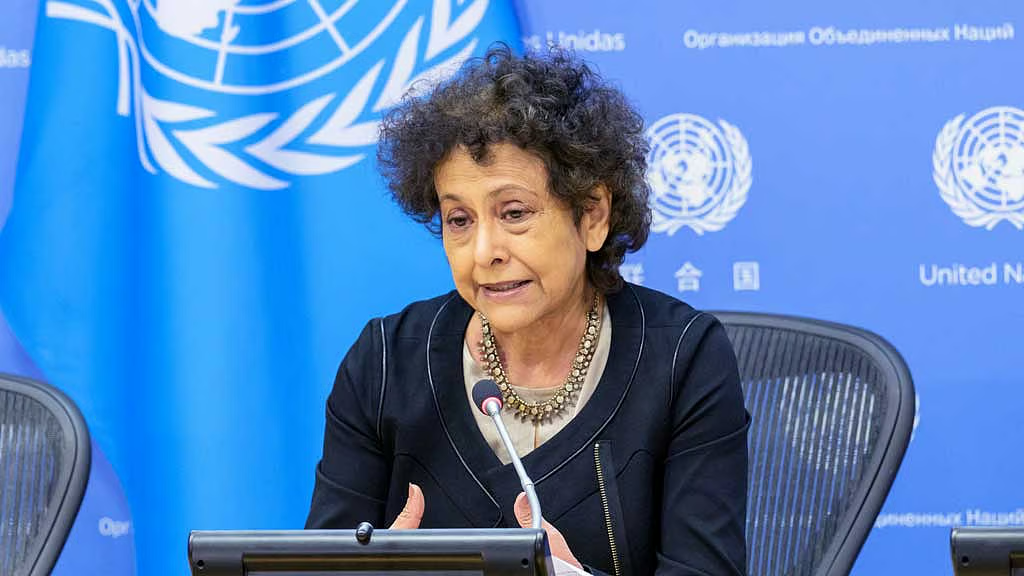
The government has appointed internationally renowned human rights advocate Irene Khan as Bangladesh’s permanent representative to the United Nations, granting her the rank of state minister.
The Cabinet Division issued a gazette notification on Wednesday confirming her contractual appointment.
According to the notification, Irene Khan will receive the rank, salary, allowances and other benefits of a state minister while serving as Bangladesh’s permanent representative and ambassador to the UN.
She will succeed Salahuddin Noman Chowdhury, the current permanent representative to Bangladesh’s UN Mission. Foreign ministry officials said Chowdhury is set to become the country’s next foreign secretary.
Khan has served as the UN Special Rapporteur on the promotion and protection of the right to freedom of opinion and expression since Aug 1, 2020, becoming the first woman to hold the mandate since it was established in 1993.
An internationally recognised advocate for human rights, gender equality and social justice, she also teaches at the Graduate Institute of International and Development Studies in Geneva.
She was secretary general of London-based Amnesty International from 2001 to 2009, becoming the first woman to lead the global human rights organisation. During her tenure, Amnesty expanded its work on economic, social and cultural rights alongside political and civil rights, and launched its first global campaign to end violence against women and girls.
From 2012 to 2019, Khan headed the International Development Law Organization (IDLO), an intergovernmental organisation dedicated to the rule of law and sustainable development.
She previously served as a visiting professor at the State University of New York Law School in 2011 and as chancellor of the University of Salford in the United Kingdom from 2009 to 2015.
Khan began her professional career with the UN High Commissioner for Refugees (UNHCR), where she worked for 21 years in headquarters and field operations, including as chief of mission in India.
She has also served on the World Bank Gender Advisory Council, the UNAIDS High Level Panel on HIV Prevention and Human Rights, and the UN Global Compact Advisory Council. She has been a governing board member of the Overseas Development Institute in the UK, BRAC and Uganda-based Barefoot Law.
Born in Bangladesh, Khan studied at University of Manchester and Harvard Law School. She has received several international honours, including the Sydney Peace Prize, for her contribution to human rights.
Bangladesh
Tarique outlines plan for employment exchange centres, expansion of overseas labour markets

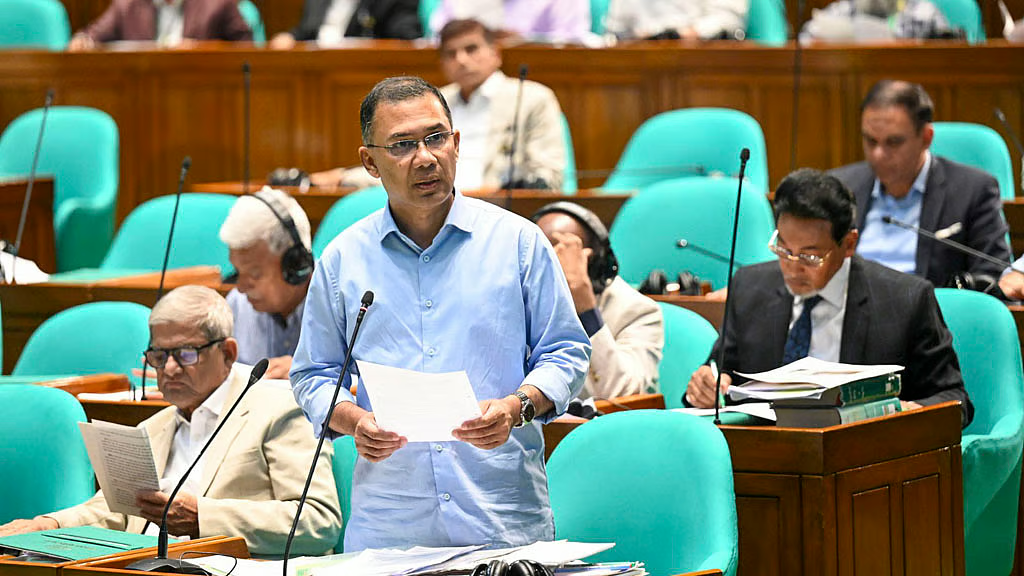
The government will establish Employment Exchange Centres across Bangladesh to strengthen domestic labour market management, improve skills development and expand job opportunities, Tarique Rahman has said.
Responding to a question from Tangail-6 MP Robiul Awal in parliament on Wednesday, the prime minister said the centres would be created in line with the government’s election manifesto.
He also said the government is working to reopen the Malaysian labour market, expand opportunities in Thailand, South Korea and Japan, and revive or widen labour markets in Oman, Bahrain and the United Arab Emirates through diplomatic efforts.
The government is also actively negotiating to set up visa centres in Dhaka for European nations like North Macedonia, Serbia, Mauritius, and Portugal to ease the migration process for skilled Bangladeshi workers, he said.
He added that the Bureau of Manpower, Employment and Training (BMET) will introduce more demand-driven language courses and increase the number of training institutions.
Bangladesh
Bangladesh extends curbs on govt-funded foreign travel, tightens rules on official vehicle purchases
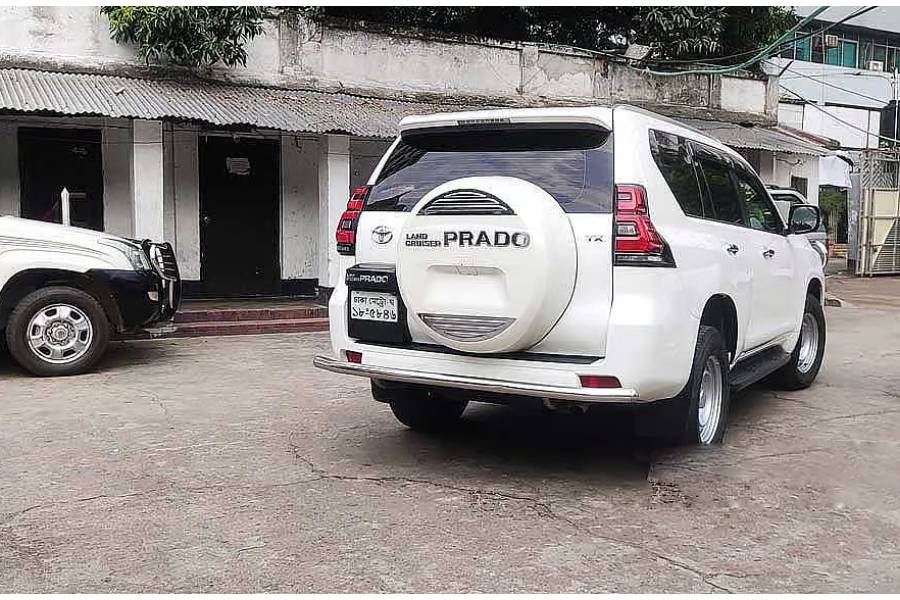
The government has extended restrictions on government-funded overseas travel for public officials in the ongoing fiscal year and tightened rules on the purchase of official vehicles as part of efforts to reduce public expenditure.
The Finance Division issued a notification on Wednesday saying the measures are aimed at ensuring the proper use of limited public resources, bringing inflation to a tolerable level and maintaining macroeconomic stability.
Under the directive, government officials and employees will continue to be barred from attending seminars, symposiums and workshops abroad at government expense.
The notification also imposes stricter controls on the purchase of vehicles under both development and operational budgets.
Only vehicles included in the approved Table of Organisation and Equipment (TO&E) that are more than 10 years old may be replaced, it said.
New government institutions will require prior approval from the Finance Division before purchasing TO&E-listed vehicles.
The Finance Division also instructed all government agencies to suspend expenditure from all types of block allocations.
Funding for the purchase of all categories of vehicles, including motor vehicles, watercraft and aircraft, has also been halted.
However, vehicles used for transporting personnel rather than for personal use may be replaced if they are more than a decade old.
Newly established government institutions may also procure such vehicles only with Finance Division approval.
The notification also states that, except for ambulances and vehicles used for security purposes, all replacement or newly purchased government cars and jeeps must be fully electric.
The government said the measures are intended to curb operational spending while supporting broader efforts to maintain fiscal discipline and economic stability.

Two US soccer team staff members suspended by FIFA for Belgium World Cup game

Inside the Haaland machine

‘Little disappointed in our batting unit’: Miraz rues Tigers’ ODI opener defeat against Zimbabwe