Environment
ADB boosts 2019-2030 climate financing target to $100b

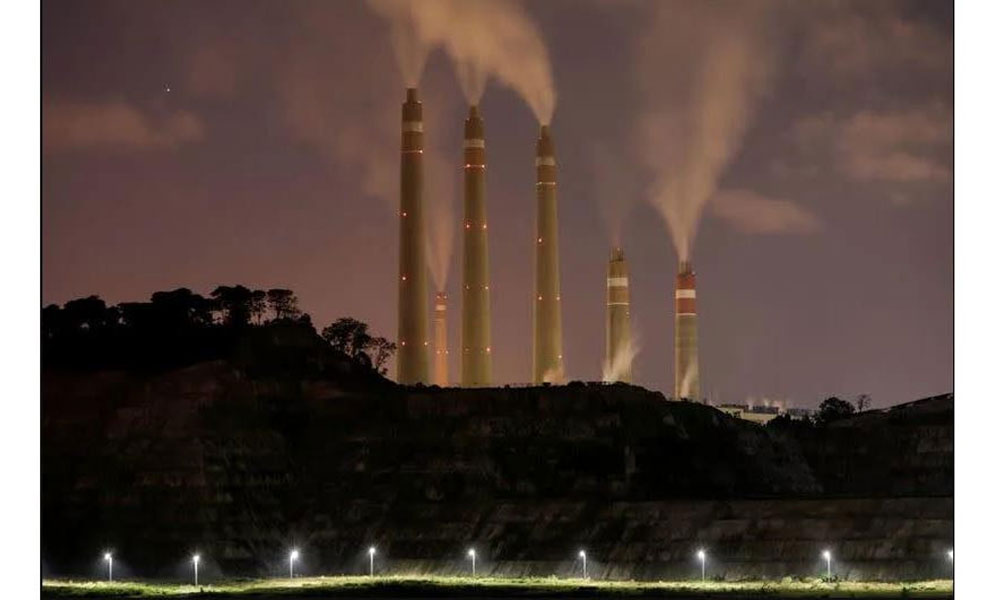
The Asian Development Bank’s will boost its climate financing goals by $20 billion to a new target of $100 billion for the 2019-2030 period and aims to launch its concept for retiring coal-fired power plants at the COP26 climate conference in Scotland next month, the lender’s chief said on Tuesday.
The plans, disclosed by ADB President Masatsugu Asakawa in an interview with Reuters, increase a previous $80 billion goal for climate financing for developing countries in Asia for the decade announced in 2018.
“The fight against climate change will be won or lost in Asia and the Pacific, and we are committed to serving as a climate bank and a long term climate partner for our region,” Asakawa said.
The additional $20 billion in financing support will provide support for climate mitigation efforts including low-carbon energy sources, climate adaptation projects and private sector projects.
Asakawa said ADB now plans for $66 billion for climate mitigation financing through 2030, including for new energy storage, energy efficiency and low-carbon transportation investments. The Manila-based lender will plan for climate adaptation financing of $34 billion, including agriculture, urban and water adaptation projects.
The bank also plans to boost its private sector operations to attract more private sector capital to finance new climate technologies and innovations, using $12 billion from its balance sheet to attract up to $30 billion in new private capital, due to increased demand for such financing, Asakawa said.
The plans were presented on Tuesday to US Treasury Secretary Janet Yellen, who had convened a meeting with multilateral development banks, including ADB and the World Bank, to discuss their efforts to boost climate financing in line with the 2015 Paris Agreement.
COAL PLANT RETIREMENTS
Asakawa said the group has finished an initial feasibility study and is now embarking on a longer study of the concept in three target countries — Vietnam, the Philippines and Indonesia.
The initial feasibility study provided a framework for the ADB to engage with a broad set of country, regional and global stakeholders to support the transition from coal to clean energy. Asakawa said that interest is growing among other developing countries to join the initiative at a later date.
ADB and its partners, including British insurer Prudential, lenders Citi and HSBC and BlackRock Real Assets, are aiming to complete and launch a pilot investment fund in 2022 and make its initial power plant purchase next year or early 2023.
The concept is not included in the ADB’s overall climate financing goals, because most of the money will come from private investors and donor sources, including philanthropists, Asakawa said.
A study by the Institute for Energy Economics and Financial Analysis estimated that retiring half the coal power plants in Indonesia, the Philippines and Vietnam would require as much as $55 billion in financing, requiring strong support from Southeast Asian governments to attract financing.
The ADB will announce the partnership to design and establish the Energy Transition Mechanism (ETM) at COP26.
“Even now, some philanthropists have already shown interest in investing in this new initiative. So we plan to launch the ETM at COP26 in Glasgow,” Asakawa said.
Asakawa added he hopes to be able to present the plans along with Indonesian Finance Minister Sri Mulyani Indrawati and Philippines Finance Minister Carlos Dominguez.


Environment
Sovereign guarantees limit renegotiation of private power plant contracts: power minister

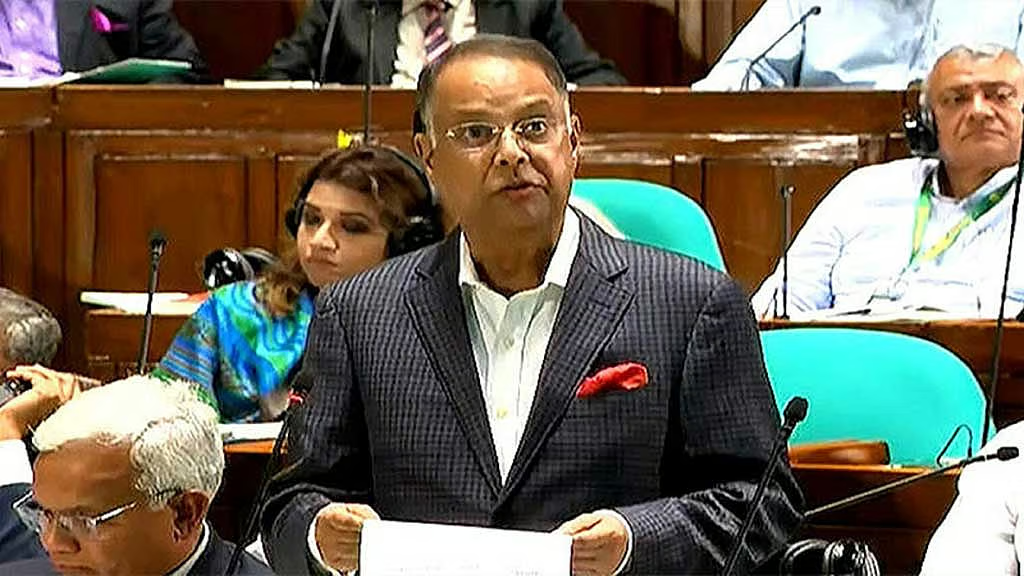
Power Minister Iqbal Hassan Mahmood has said the government’s ability to renegotiate costs, including capacity charges, under contracts signed with private power plants by the previous administration is limited because those agreements carry sovereign guarantees.
However, he told parliament on Wednesday that the government is negotiating with power producers to eliminate late payment fees on overdue bills.
The minister made the remarks while responding to a supplementary question from Jamaat lawmaker Mardia Mumtaz during the parliamentary session.
Mardia asked whether the government had a concrete plan to reduce capacity charges, which account for a significant share of electricity subsidies and overall power sector costs despite recent tariff increases.
In reply, Iqbal said the previous government had provided sovereign guarantees in contracts with private power companies.
“A sovereign guarantee is a guarantee by the state. Cancelling such guarantees requires a legal process that takes considerable time,” he said.
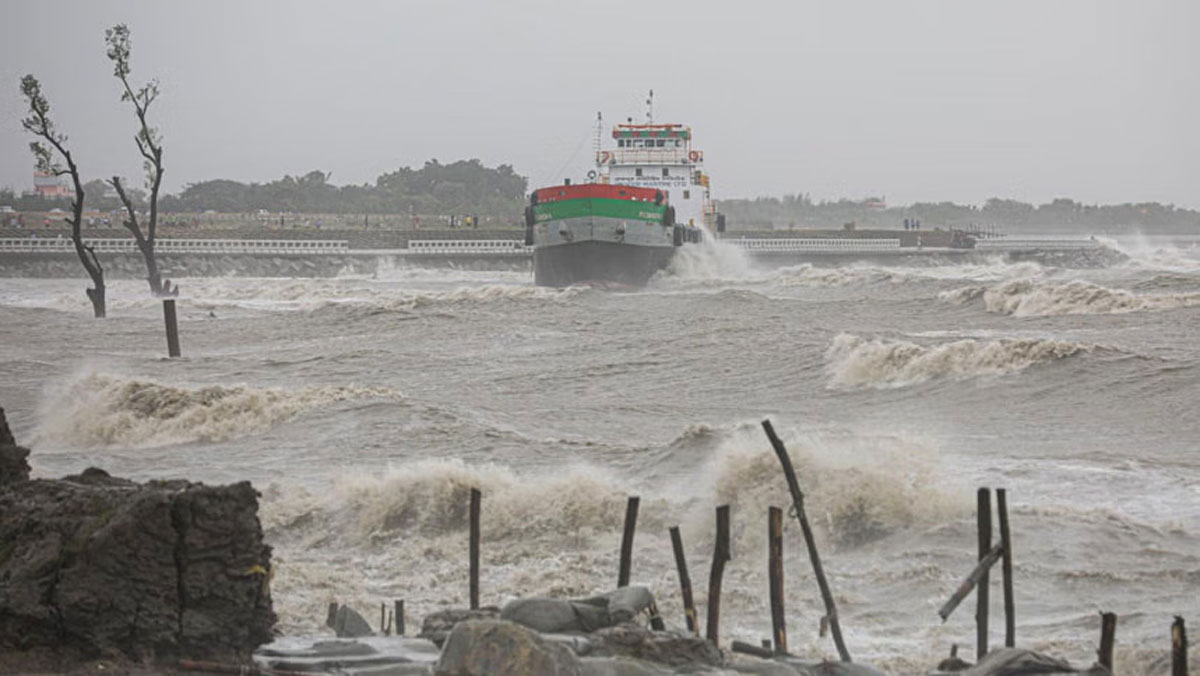
At least five people were killed as cyclone Midhili crossed the country today, inundating low-lying areas in many parts of several southern districts.
The cyclone that caused heavy rains disrupted normal life, halted cargo handling in Chattogram port and river transport services across the country.
A special bulletin from the Met office said the cyclonic storm completed crossing the coast at 3:00pm and weakened into a deep depression.
The highest wind speed was recorded in Patuakhali, at 102km per hour, the Met office said.
In Cox’s Bazar, four of a family died when a mud wall of a house collapsed amid heavy rains early today.
The incident took place around 3:00am in Panirchhara area of Hnila union under Teknaf upazila, said Rashed Mahmud Ali, the local chairman.
The dead are Anwara Begum, 50, her son Shahidul Mostafa, 20, and daughters Nilufa Yasmin, 15, and Sadia Begum, 11, he added.
Locals said incessant rain hit the area since yesterday morning due to a depression in the Bay of Bengal.
The rain weakened the wall and then it collapsed on the victims, they said.
An elderly man was killed as a tree branch fell on him in front of his house at Moghdhora village in Sandwip upazila in Chattogram around 6:00pm.
The victim is Abdul Ohab, 65, said Shahidul Islam, officer-in-charge of Sandwip Police Station.
In Patuakhali, the agriculture department fears a damage to the Aman crop. At least 5 percent of the total Aman crop is in ripe and another 20 percent in semi-ripe condition.
Patuakhali Agricultural Extension Department (DAE) fears a fourth of the rest 75 percent crop will be damaged badly, as heavy rains caused by the cyclone left many crops lying on the ground.
Some vegetable crops have also been damaged. However, it will take some time to assess the extent of the damage, said Nazrul Islam, deputy director of Patuakhali DAE.
In Barishal, heavy rainfall caused by Madhili, meaning a huge tree, flooded low-lying areas of the city.
Most of the city roads, including Battala Road and Sadar Road, got inundated following heavy rains since last afternoon.
Earlier, the Bangladesh Inland Water Transport Authority suspended operation of all the launches on different routes including Dhaka-Barishal due to the cyclone.
The Chattogram port authorities had also halted loading and unloading activities.
Environment
Bangladesh Receives $858 Million World Bank Financing to Improve Climate Resilient Agriculture Growth and Road Safety


The government of Bangladesh and the World Bank today signed two financing agreements totaling $858 million to enhance climate-resilient agricultural growth, food security, and improve road safety.
The $500 million Program on Agricultural and Rural Transformation for Nutrition, Entrepreneurship, and Resilience (PARTNER) will help transform the agriculture sector by promoting crop diversification, food safety, and climate resilience across agri-food systems of Bangladesh.
The Program will support sustainable and nutritious food production through greater efficiency in input use, good agriculture practices, and the promotion of stress-tolerant and nutrient-dense varieties. It will help increase entrepreneurship and access to services by expanding access to digital agricultural services tools, improved food safety processes, and increased female and youth entrepreneurship. It will also help modernize institutions and policies through improved data management, increased research and development activities, and partnerships with global agricultural research institutions and with the private sector.
“Bangladesh has made remarkable development and economic growth since independence. New frontiers of challenges, like increasing climate change impacts, now call for urgent actions. The World Bank is committed to helping Bangladesh overcome barriers to sustainable and inclusive green growth,” said Abdoulaye Seck, World Bank Country Director for Bangladesh and Bhutan. “These two projects will be important to help the country remain on a sustainable growth path through boosting climate-resilient agricultural productivity and enhancing the income of hundreds and thousands of farmers as well as protect the people and the economy from the loss caused by untimely deaths, disabilities, and injuries resulting from road crashes.”
The $358 million Road Safety Project—which is the first dedicated road safety project in South Asia supported by the World Bank—will help the country improve road safety and reduce deaths and injuries from road traffic crashes in selected high-risk highways and district roads. In two national highways—N4 (Gazipur-Elenga) and N6 (Natore to Nawabganj)—the project will pilot comprehensive road safety measures, including improved engineering designs, signing and marking, pedestrian facilities, speed enforcement, and emergency care.
It will help modernize the capacity of the Traffic Police and highway patrol to manage speeding and prevent risky road user behavior. To improve post-crash care, it will set up an ambulance service via a toll-free number and upgraded emergency care services in selected district hospitals, and Upazila Health Complexes along the two national highway corridors.
“These two projects will contribute to the country’s vision of achieving upper-middle income status by 2031,” said Sharifa Khan, Secretary, Economic Relations Division, Government of Bangladesh. “Our National Agriculture Policy places high priority to ensure nutrition, food security, and climate resilient agriculture and the new Road Transport Act places a substantial focus on road safety. By ensuring food security, empowering farmers, creating opportunities for entrepreneurship as well as improving road safety management and minimizing tragic loss of human lives, these two projects will contribute to sustainable economic growth.”
The agreement was signed by Sharifa Khan and Abdoulaye Seck on behalf of Bangladesh and the World Bank, respectively.
The credits are from the World Bank’s International Development Association (IDA) and have a 30-year term, including a five-year grace period. The PARTNER project will also receive a $43 million co-financing from the International Fund for Agricultural Development (IFAD).
Bangladesh currently has the largest ongoing IDA program totaling $16.3 billion. The World Bank was among the first development partners to support Bangladesh and has committed about $40 billion in grants, interest-free and concessional credits to the country since its independence.

Two US soccer team staff members suspended by FIFA for Belgium World Cup game

Inside the Haaland machine

‘Little disappointed in our batting unit’: Miraz rues Tigers’ ODI opener defeat against Zimbabwe