Youth
World Mental Health Day through the lens of mental health practitioners in Bangladesh


Psycure Organization and BYLC jointly organised a webinar on October 10, in observance of World Mental Health Day, with the theme “Mental Health in an Unequal World.”
The event was supported by Rokomari .com, The Daily Star, and Science Bee. Representatives from each organisation were present. The event was graced by 150 beneficiaries.
The public panel discussion was moderated by Fabia Firoze, Chairperson of Psycure Organization and a program implementation coordinator with the Asia Foundation. Fabia was named as one of the three Global Youth Ambassadors for Gender Equality (SDG 5) by the Asian Development Bank. She was recognised by the CT Secretary of State for her outstanding service to the State of Connecticut in the US, and received the David. B Walker Award by the University of Connecticut for her tireless dedication to public service.
Furthermore, she worked with renowned organisations such as the Clinton Foundation, BRAC, and US government agencies.
The three panelists were Azharul Islam, Assistant Professor of the Department of Educational and Counseling Psychology of University of Dhaka and a bestselling psycho-fiction writer, as well as Dr M Tasdik Hasan, a medical doctor and public health specialist and a research associate at the University of Liverpool, UK and Monira Rahman, the founder of Innovation for Wellbeing Foundation which promotes mental health equity for sustainable development.
Rahman has been the Country Lead for Mental Health First Aid Bangladesh and is an Amnesty International Human Rights Defender Awardee.
The webinar covered various relevant issues such as parent-child attitudes towards mental health, the disparity in availing services, and ways to remove this disparity in Bangladesh.
Fabia Firoze started the discussion by focusing on the fact that the Covid-19 pandemic has had significant impacts on people’s mental health. Some groups, including health and other frontline workers, students, as well as those living alone, those living with and taking care of their families and those with pre-existing mental health conditions have been particularly affected. About 2 crore people in Bangladesh have been found to be suffering from mental disorders, according to a government survey.
Although Bangladesh has been identified as a country with a dire need of mental health services by the international community, the government spends only 0.44 percent of the national budget in this sector, and currently, there are only 0.073 psychiatrists per 100,000 populations. So, there is a critical need to cater to the mental health requirements of Bangladesh, mentioned Firoze.
Azharul Islam spoke at length about how more investment in research for culturally appropriate and indigenous solutions, and infrastructure development can help increase the availability and accessibility of mental health services. People are nowadays actively seeking psychological help. Yet, the lack of services outside Dhaka City is a big problem, Islam mentioned.
He emphasised on the delicate and time-intensive nature of encouraging a mass behavioral change in accepting and dealing with mental health issues. Furthermore, he stressed that the government can introduce a hotline number for citizens to discuss issues related to mental health.
Monira Rahman spoke about the necessity of public and private sector partnerships in tackling the gap in mental healthcare in Bangladesh. Despite the formulation of government policies concerning the biological care of mental issues, the implementation of such policies is a responsibility of both the public and private sectors, mentioned Rahman. She highlighted the importance of experts for social rehabilitation and integration, which are vital for recovery.
She emphasised on implementing a comprehensive Biopsychosocial model to enhance treatment and prevention strategies related to mental health issues. These strategies need to be established since changes in biological, social, and psychological influences are salient components to address mental health. She emphasized that prevention through developing resilience, self-care, and emotional awareness will take us far in improving mental healthcare services in Bangladesh.
The discussion further explored mental health as a career and addressed the differences between service providers in the medical field and psychological field. Quality assurance and the seeming lack of public faith in mental health services need to be addressed in the mental health sector, the discussants noted. All the panelists weighed on why high-tier psychologists are so few in the field, what may incentivise prospective students to choose mental health as a career, and addressed the critical role of non-professionals such as peer workers and lay counsellors in providing mental health services.
They reiterated that awareness, education, and understanding of mental health are success factors to address mental health in Bangladesh.
Dr M Tasdik Hasan mentioned many factors that create an unequal world, in terms of mental health. He discussed the need for social inclusion and the significance of empathy for improving the lives of people in crisis. To illustrate the importance of such psychological techniques, he spoke of his childhood experience of bullying, when sharing his experience with a teacher had helped him overcome his insecurities.
It helped him identify his individual strengths, which changed his life in a positive manner.
He also talked about the importance of understanding when one is in need of help, and indeed, in what respect. He discussed how those who don’t recognise the signs of deteriorating mental state often don’t have appropriate coping strategies and can end up feeling overwhelmed and out of control, which can hamper their daily activities. These are signs that one needs to see a mental health service provider, either a professional psychologist or a counsellor, who can conduct appropriate assessments, he mentioned.
Though the process of changing the mental health landscape may be a long and tedious process, the mental health practitioners were hopeful that if everyone comes together, we can promote mental health for all in Bangladesh. The public panel discussion ended with an interactive question and answer session with the participants.











Bangladesh
Tarique outlines plan for employment exchange centres, expansion of overseas labour markets

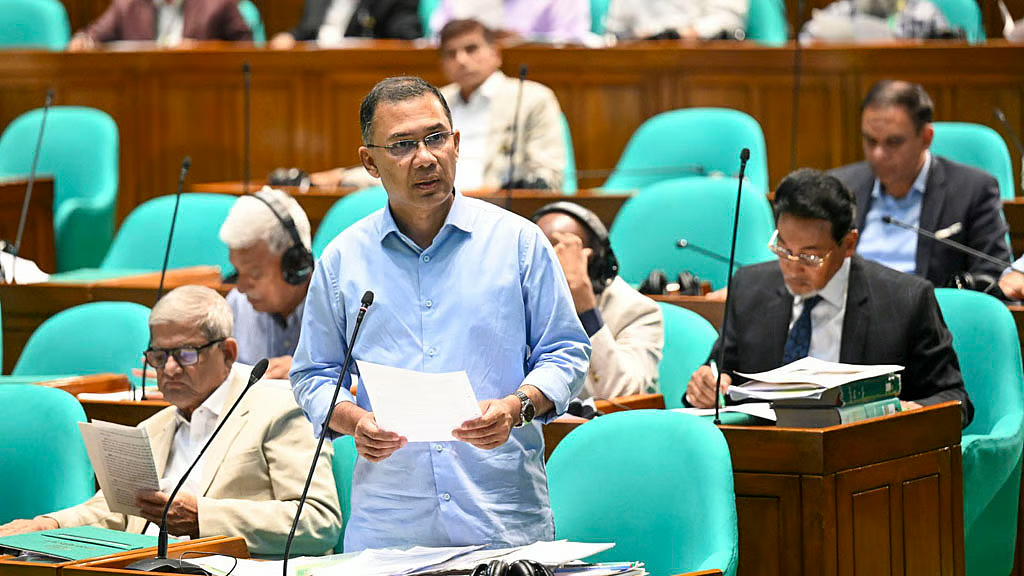
The government will establish Employment Exchange Centres across Bangladesh to strengthen domestic labour market management, improve skills development and expand job opportunities, Tarique Rahman has said.
Responding to a question from Tangail-6 MP Robiul Awal in parliament on Wednesday, the prime minister said the centres would be created in line with the government’s election manifesto.
He also said the government is working to reopen the Malaysian labour market, expand opportunities in Thailand, South Korea and Japan, and revive or widen labour markets in Oman, Bahrain and the United Arab Emirates through diplomatic efforts.
The government is also actively negotiating to set up visa centres in Dhaka for European nations like North Macedonia, Serbia, Mauritius, and Portugal to ease the migration process for skilled Bangladeshi workers, he said.
He added that the Bureau of Manpower, Employment and Training (BMET) will introduce more demand-driven language courses and increase the number of training institutions.

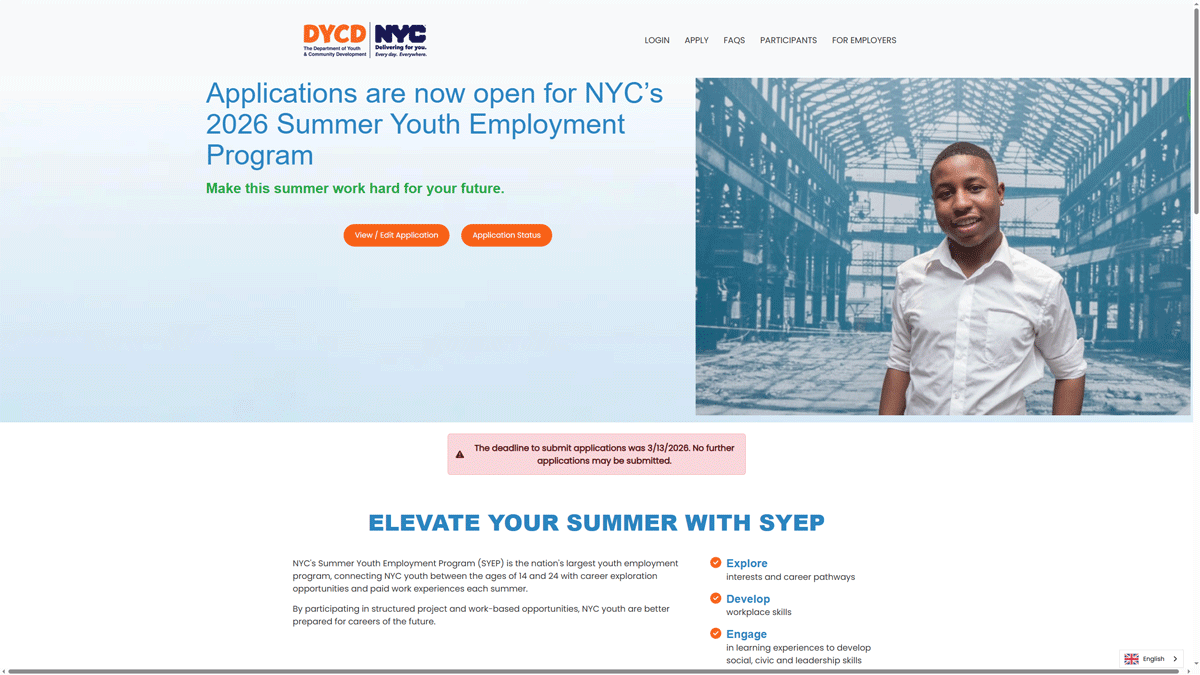
Mayor Zohran Kwame Mamdani on Tuesday officially launched the Summer Youth Employment Program (SYEP), as more than 100,000 young New Yorkers prepare to begin paid jobs across the city’s five boroughs.
The six-week program, running from July through August, places participants in thousands of workplaces, including community organizations, small businesses, hospitals, cultural institutions and government agencies. The initiative gives young people valuable work experience while helping them develop professional skills and earn an income.
“For so many young New Yorkers, a summer job is more than just a way to pass the time—it is a step toward their future,” Mayor Mamdani said. “For years, SYEP has helped thousands of young people launch their careers, develop professional skills and give back to their communities while earning a paycheck. Congratulations to this year’s participants. I hope you not only learn new skills at work but also discover more about yourselves this summer.”
Deputy Mayor for Health and Human Services Dr. Helen Arteaga said the program provides young people with essential workplace experience while promoting long-term economic success.
“The road to professional and personal success is paved by programs like SYEP,” Arteaga said. “Beyond workplace experience, the program also offers education in financial literacy and creates opportunities for young people in high-risk communities to build stable and successful futures.”
Marking its 63rd year, SYEP remains the nation’s largest youth employment program. NYC Department of Youth and Community Development (DYCD) Commissioner Sandra Escamilla-Davies said the initiative continues to open career pathways by connecting participants with employers, mentors and meaningful work experiences.
“SYEP helps young people explore their interests, build professional skills and prepare for the future while strengthening communities across New York City,” Escamilla-Davies said. “Together with programs such as Summer Rising, Saturday Night Lights and Summer Night Lights, it offers safe and engaging opportunities that continue to benefit participants long after the summer ends.”
Earlier this year, Mayor Mamdani released a video encouraging young New Yorkers to apply for the program, resulting in a record number of applications.
The program is designed to support young people who often face barriers to employment, including residents of NYCHA housing, homeless youth, young people with disabilities, those involved with the justice system, youth in foster care and individuals at high risk of gun violence.
Studies have found that participation in SYEP improves school attendance, builds workplace skills and reduces crime and incarceration. A 2021 study found that participants were 17 percent less likely to be arrested and 23 percent less likely to face felony arrests. Research also shows that participants are significantly less likely to be incarcerated in New York State more than five years after completing the program.
As part of its partnership with the city, Lyft will provide 1,200 free two-month Citi Bike memberships to SYEP participants, helping them commute to work and travel across the city. The company will also host interns on its Social Impact team, offering hands-on experience and opportunities to develop leadership and communication skills.
“We’re proud to continue partnering with the NYC Department of Youth and Community Development because access to transportation is access to opportunity,” said Inbar Kishoni, Senior Manager of Community & Equity Programs at Lyft Urban Solutions. “Since 2022, Lyft has provided free Citi Bike memberships and practical work experience to help young New Yorkers build skills and confidence. When young people move, cities move with them.”


The Transformation: Art of Alchemy exhibition was officially inaugurated on Wednesday at the Residence Gallery of the Dutch Embassy.
Guests explored evocative works by featured artists Vinita Karim, Rokeya Sultana, Asma Akber, Abdus Shakoor, Proshanta Karmakar Buddha, Biplob Chakraborty, and Ranjit Das.
The exhibition space allowed for meaningful dialogue on the transformative power of art in healing and wellbeing.
“Community healing begins with the shared processing of grief, joy, confusion, and hope,” said Shazia Omar, founder and CEO of Dhaka Flow.
“Through this visual exhibition and our workshops, we wanted to curate a multi-dimensional experience that highlighted the importance of shared creative expression in community healing.”
“Transformation: Art of Alchemy” was a powerful step forward in Dhaka Flow’s mission to create spaces where art and wellness intersect.
As we look ahead, we are committed to deepening this work—especially by uplifting emerging and youth artists across Bangladesh. Our vision is to keep expanding opportunities for shared creative expression, and to continue exploring the ways art and community can support collective wellbeing.
Alongside the artwork, Dhaka Flow has conducted a breathwork—meditation session in the space, with another one coming up soon.
They are also hosting three art workshops at the Dhaka Flow studio, and attendees are invited to sign up using the link below.
The Dhaka Flow team was present to greet visitors and share their vision for more events that celebrate artists and create space for transformation through movement, breath, and art.
In August, the space will host another exhibition presenting youth artwork from around the country.
The exhibition remains open until the end of July, and paintings can be viewed every Saturday from 12–5pm by appointment only.

Two US soccer team staff members suspended by FIFA for Belgium World Cup game

Inside the Haaland machine

‘Little disappointed in our batting unit’: Miraz rues Tigers’ ODI opener defeat against Zimbabwe