Tech
Digital Bangladesh Mela 2023 Kicks off with Great Ambitions


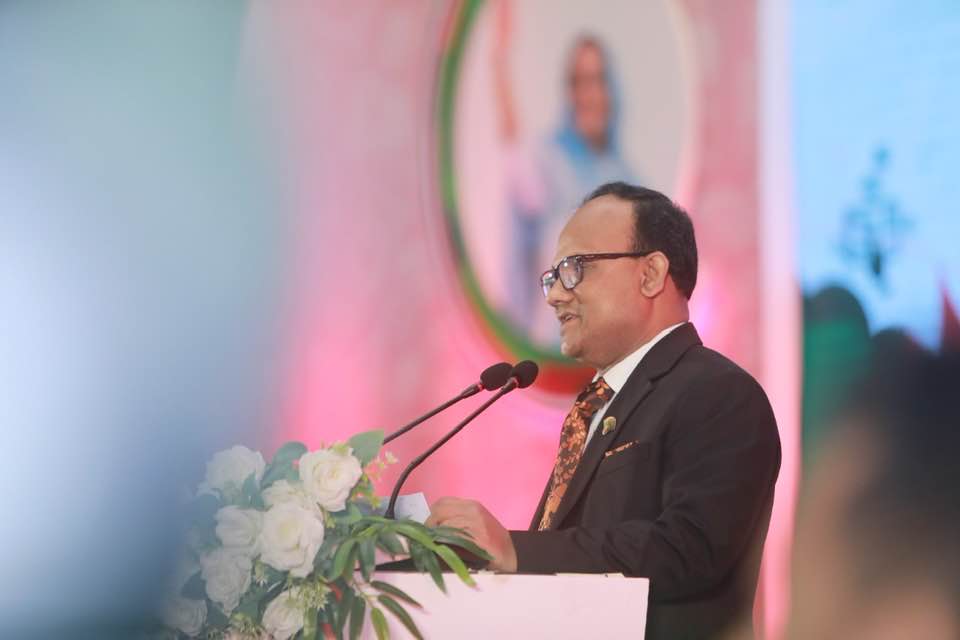
Digital Bangladesh Mela 2023 has been kicked off today at Bangabandhu International Conference Center (BICC) located at Agargaon in the capital. This fair will involve ecosystem partners and align them to towards latest technological trends. Huawei Bangladesh has come forward with its latest technologies for different verticals and those solutions have fascinated the visitor of the event.
At the morning, Dr. Dipu Moni, Minister of the Ministry of Education, inaugurated the event as the Chief Guest. A.K.M. Rahmatullah MP, Chairman, Standing Committee on Ministry of Post Telecommunication & Information Technology; Abu Hena Morshed Zaman, Secretary, Posts and Telecommunication Division were present at the event as Special Guest whereas Mustafa Jabbar, Minister of the Ministry of Posts, Telecommunications and Information Technology, presided over the opening ceremony.
This fair includes 77 pavilion and 52 stalls participated by different ICT solutions provider, telecom operators, mobile financial service providers, internet and infrastructure service providers and more. Huawei has designed its pavilion with latest technologies and solutions, quiz and prizes. The Huawei pavilion is displaying multiple breakthrough innovations in different frontiers like 5.5G, Enterprise Business Solutions, Huawei cloud, and digital power. There are also demo sites of smart port and digital power solutions. These two models have portrayed the potential benefits for Bangladesh.

Huawei is also offering 20% discount on Huawei Cloud Solutions for the visitors. Interested visitors need to register their requirement during the fair and can avail the offer directly from Huawei Bangladesh team later on after the fair. Apart from these, the visitors can join the quiz in every two hour and win attractive prizes. Invited guests of the event including the chief guest and special guest visited Huawei’s pavilion on the opening day.
Honorable Education Minister Dr. Dipu Moni said, “The essence of Digital Bangladesh can be summarized as ‘the Golden Bengal of the 21st century’. Some people define it as ‘a happy and prosperous, hunger and poverty free, discrimination-free Bangladesh. And technology is the best way to meet the basic needs of all the people of the country. Digital Bangladesh is now a reality. A state can be called digital only when connectivity is ensured in all spheres of life. Currently, a knowledge-based society is in the process of being developed in the country riding on the power of connectivity. Bangladesh is a prime example of this digital transformation.” Mustafa Jabbar, Honorable Minister of the Ministry of Posts, Telecommunications and Information Technology, said, “The country has now become a Digital Bangladesh through technological development. We want to become a Smart Bangladesh by 2041. Bangladesh is capable of technological innovation, now it is our responsibility to transform the country into a Smart Bangladesh through digital transformation. To develop a Smart Bangladesh, we have to create smart people. Through this Digital Bangladesh Mela, we are entering the era of Smart Bangladesh.”



Apple , opens new tab plans to spend more than $30 billion under a multi-year chip supply deal with Broadcom, bolstering its U.S. sourcing as President Donald Trump’s administration pushes to expand domestic chip manufacturing.
Broadcom shares rose more than 4%, while Apple shares were down marginally.
Apple said on Wednesday the deal, which was struck earlier this week and runs through 2031, covers FBAR filters – or radio-frequency chips used for wireless connectivity in its devices – that it had been developing with Broadcom since at least 2023.
Broadcom will invest $1.5 billion to expand its Fort Collins, Colorado, factory under the deal, which Apple said would result in the production of at least 15 billion chips and support its work with the Trump administration to source more components domestically.
“The cutting-edge components built in Fort Collins are essential to delivering the incredible performance and connectivity our customers expect, and we’re proud to deepen our investments in U.S.-based suppliers that share our commitment to excellence and innovation,” Apple CEO Tim Cook said in a statement.
“We’re grateful to the president and his administration for supporting important projects like this.”
In August 2025, Apple raised its U.S. investment commitment to $600 billion over four years, adding $100 billion to a previously announced spending plan.

China is planning to allow the country’s top AI companies to buy a limited number of Nvidia’s, opens new tab H200 chips, the Information reported on Wednesday, citing two people with direct knowledge of the matter.
Chinese officials have told Alibaba, opens new tab, ByteDance and DeepSeek in recent weeks that they may soon receive permission to buy some H200 chips, the report said.
Shares of Nvidia rose 1% after the report.
The chip giant did not immediately respond to a Reuters request for comment, nor did the U.S. commerce department, which oversees exports of advanced AI chips overseas.
China’s commerce ministry also did not immediately respond to a request for comment, while Alibaba, ByteDance and DeepSeek did not respond outside of regular business hours.
The U.S. government has allowed Nvidia to sell its advanced H200 chips to China, and licensed about 10 Chinese firms to buy the chips. However, Chinese officials, keen to nurture domestic suppliers, have withheld approval so far.
Reuters reported in March that Nvidia had won Beijing’s approval to sell the chips to China, citing sources, and around the same time, Nvidia CEO Jensen Huang also told CNBC that the company had clearance from China.
Beijing is still determining the exact number of Nvidia chips to approve, and it could amount to fewer than 200,000 in total, the Information said, adding that was less than half of what the companies requested earlier this year.
Last month, Reuters exclusively reported that Nvidia told Chinese clients its new “Vera” central processors for AI data centres could be available as soon as August and that they can begin placing orders.
Nvidia’s market share in China has effectively fallen to zero, Huang said in October, hurt by U.S. export controls and Beijing’s push for self-reliance in key technologies.
The potential shift in China’s stance underscores the growing computing capacity crunch that the country’s tech companies are facing.

A team of software testers found that Australian social media platforms did not request age proof for any of 50 accounts that declared themselves to be 16, a result that leaves the country’s world-first under-16 ban “ineffective” at the most basic screening stage, according to a study seen by Reuters.
Since December, platforms such as Instagram, Snapchat and YouTube have been required to bar people under 16 and take “reasonable steps” to verify age, with regulators recommending multiple layered checks. But the new research, conducted by those who advised the nationwide curb, shows that the initial vetting step, which estimates a user’s age from general online activity, is failing to flag young people for tougher verification.
The testers, who last year trialled age-assurance software on more than 1,000 Australians, opened 50 new accounts after the law took effect and set the age as 16. None of the platforms asked for additional proof, the researchers told Reuters. The findings highlight a flaw that has been largely overlooked while public debate has focused on photo-based age-estimation tools.
The ban’s rollout has been widely criticised after surveys indicated that most under-16s still access the platforms. The government last month doubled the maximum fine and warned of possible court action against tech giants, accusing them of setting the system up to fail. Platforms have countered that they are simply following the regulator’s guidance, which prioritises low-friction checks and prevents reliance on government ID alone due to privacy concerns.
Some advisers to the original trial said they had repeatedly warned that the testing process ignored real-world circumvention, including minors entering false birthdates. “We did want to talk about circumvention, but we kept on being told that that wasn’t part of the actual trial,” Colm Gannon of the International Centre for Missing & Exploited Children told Reuters. A youth digital rights academic involved in a longer-term study of the ban said more impressive results might emerge once platforms move to age-inference methods later in the year. The regulator maintains that the recommended layered approach, if implemented correctly, ensures no single point of failure.

Two US soccer team staff members suspended by FIFA for Belgium World Cup game

Inside the Haaland machine

‘Little disappointed in our batting unit’: Miraz rues Tigers’ ODI opener defeat against Zimbabwe