Tech
APICTA SUSPENDS BASIS IT ASSOCIATION FOR 2 YEARS

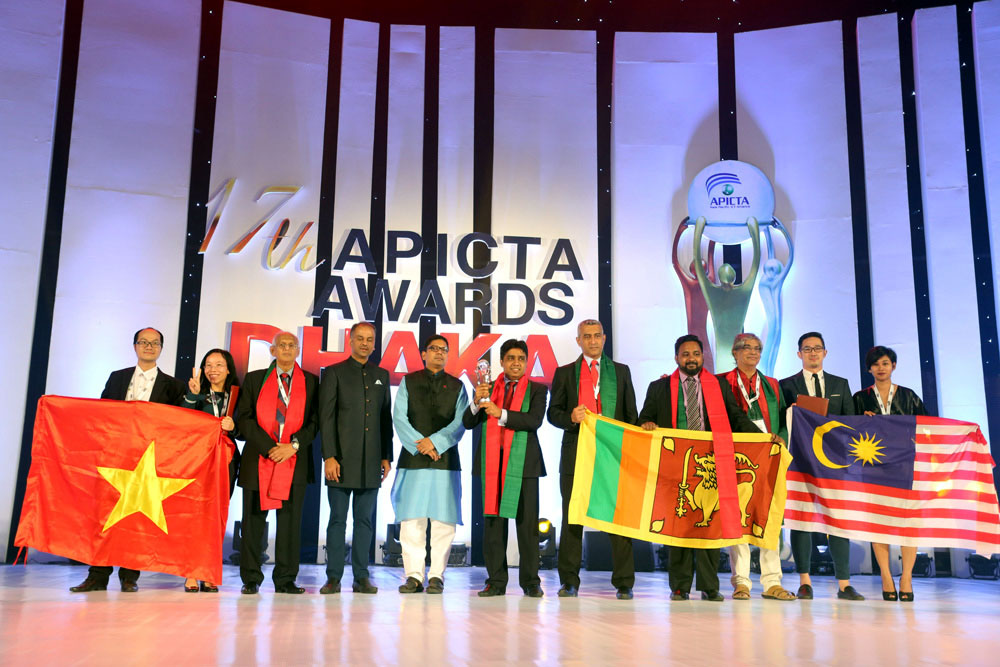
Asia Pacific ICT Alliance (APICTA) Executive Committee (EXCO) has suspended BASIS IT Association for 2 years due to the lack of cooperation,noncompliance to the clear directive of the EXCO regarding the requirement for participants to attend in person and the disruption caused due to their late stage withdrawal of the APICTA Awards program held December 7 – 11, 2022 in Islamabad, Pakistan.
APICTA was not immune to the global impact of COVID-19 and as a result no in-person
APICTA events were held in 2020 and 2021. A joint virtual award program was held for the
very first time for these two years. On March 30, 2022, Pakistan won the bid to host
APICTA Awards in Islamabad and following key decisions were made at the APICTA EXCO
committee meeting:
- Ratified that the APICTA event for 2022 in Islamabad be held physically.
- If by the event date (December 7 to 11, 2022) a member economy had governmentimposed
travel restrictions due to COVID-19, all participants from that member economy
could opt to attend virtually. - As for the Primary and Secondary Student category, it was made known to all member
economies that the students could participate virtually or physically. - With this context several meetings were held including a crucial meeting on November 8,
2022, where Bangladesh was represented by BASIS.
At the meeting, the host economy, Pakistan, through P@SHA, the organiser of APICTA
2022, together with APICTA EXCO, offered the following to each economy:
a) Visa applications made through P@SHA for all participants from every economy to ease
the burden of applying directly, if they wish to.
b) Assistance where required from any government department or relevant diplomatic
channel to ease in the process of visa application.
c) Subsidies including discounts for lodging for all judges travelling from various
economies and in some instances, airline fare discounts.
Chairman APICTA, Mr. Stan Singh said, “despite all of this, Bangladesh through BASIS did
not take advantage to explore this opportunity so that all judges and participants who were
registered to attend could travel with ease and economically to Islamabad.”
On November 19, 2022, APICTA Secretariat received a letter from BASIS expressing in the
letter that they were still “waiting” for APICTA EXCO’s response on their request to attend
virtually. However, the APICTA EXCO were confused over this strange and lapsed request
as the matter was resolved at the November 8, 2022 meeting, but nevertheless APICTA
EXCO responded soonest on November 20, 2022 expressing to BASIS that there was no
actions or decisions pending from APICTA EXCO and that it was not only made clear at the
November 8 meeting of the decision, but reiterated the decision in that, unless there was
any travel restrictions due to COVID-19, all participants (excluding students) must attend in
person.
BASIS was also offered additional time to register entries, even though the entry date into
the judging system was already closed. Despite all of the support that was offered, there
was no response from BASIS after the email which was sent from APICTA EXCO on
November 20, 2022.
On November 21 & 22, 2022, the APICTA Secretariat with P@SHA, wrote to every
participant from all economies respectively, informing them that unless their economy still
had travel restrictions due to COVID-19, that physical attendance was mandatory. In the
same correspondence, it was reiterated that Primary and Secondary Students Categories
could participate virtually. In the days leading up to the Awards, some of the participants
from Bangladesh were actually applying for Pakistan visas and making travel plans to
Islamabad. However, they informed P@SHA that BASIS requested them not to attend
physically but rather virtually because APICTA EXCO had agreed for Bangladesh to do so.
said, “once judging schedules and other logistics were finalised, Bangladesh withdrew completely on the eve of the event from the awards program, without giving any notice whatsoever and silently, which caused chaos and wreaked havoc in the scheduling causing the host economy to re-schedule the entire program, and this was against the harmony of APICTA.”
Mr. Singh continued to say, “this action taken by Bangladesh was reckless, unacceptable,
and untenable to APICTA EXCO and against the spirit of APICTA. The actions from BASIS
has never happened in the history of APICTA and we were all profoundly upset over this
matter. At the APICTA EXCO meeting in Islamabad, this matter was discussed and every
EXCO member at that meeting felt such action taken by BASIS was truly reckless,
unacceptable and a decision was taken to give BASIS the opportunity to explain their
actions. The response from BASIS was assigned to an APICTA EXCO sub-committee
ONLY to investigate the facts and carry out due diligence on the matter. The sub-committee
shared their findings and recommendations to the APICTA EXCO who then unanimously
decided to suspend BASIS as a member of APICTA for a period of two (2) years. In
addition, in the past we never had any issues arising with any of the BASIS leadership”
In addition, APICTA EXCO is compelled to address and clarify some of the statements
which have been circulating in the public domain:
i. Nepal had requested a leave of absence for a period from APICTA following a major
earthquake and the APICTA EXCO accepted their request and will welcome them back
when they are ready to do so and APICTA wishes them well.
ii. APICTA welcomes any new member economies, and several economies within and
outside the Asia Pacific region have shown keen interest in APICTA membership. The
EXCO reviews each application on a case-to-case basis.
iii. The core APICTA goals and objectives are always maintained – that is, promoting
growth in every member economy and providing them with every opportunity to
showcase the best examples of ICT innovations in government, businesses, community,
and individuals alike.
Over the last few years, APICTA has introduced other elements to the eco-system of
APICTA by adding initiatives like Business Matchmaking, Students Exchange, Startups
Networking etc. In addition, enabling all participants to experience the culture of the host
economy via wonderful social and tourism opportunities whilst providing and facilitating
networking and business opportunities for them, and as the technology landscape changes,
APICTA will continue in its endeavour to make changes to add to the value chain.
Mr. Inserra concluded by saying, “since its inception, every economy has had the
opportunity to host the APICTA event and Bangladesh did so successfully in 2017. It is
important to note that this suspension does not apply to participants from Bangladesh,
whom we strongly felt were deprived the opportunity in Islamabad. As such they shall have
the same opportunity to participate in the upcoming APICTA Awards 2023 & 2024. APICTA
requires that all entries must come through a representative body of the member economy.
Since BASIS, as the incumbent member body representative is suspended, we will explore
other options with the assistance of the IT Ministry to ensure active participation from
Bangladeshi students, startups, IT companies and experienced category judges.”
APICTA will not be making any further comments regarding this matter













Apple , opens new tab plans to spend more than $30 billion under a multi-year chip supply deal with Broadcom, bolstering its U.S. sourcing as President Donald Trump’s administration pushes to expand domestic chip manufacturing.
Broadcom shares rose more than 4%, while Apple shares were down marginally.
Apple said on Wednesday the deal, which was struck earlier this week and runs through 2031, covers FBAR filters – or radio-frequency chips used for wireless connectivity in its devices – that it had been developing with Broadcom since at least 2023.
Broadcom will invest $1.5 billion to expand its Fort Collins, Colorado, factory under the deal, which Apple said would result in the production of at least 15 billion chips and support its work with the Trump administration to source more components domestically.
“The cutting-edge components built in Fort Collins are essential to delivering the incredible performance and connectivity our customers expect, and we’re proud to deepen our investments in U.S.-based suppliers that share our commitment to excellence and innovation,” Apple CEO Tim Cook said in a statement.
“We’re grateful to the president and his administration for supporting important projects like this.”
In August 2025, Apple raised its U.S. investment commitment to $600 billion over four years, adding $100 billion to a previously announced spending plan.

China is planning to allow the country’s top AI companies to buy a limited number of Nvidia’s, opens new tab H200 chips, the Information reported on Wednesday, citing two people with direct knowledge of the matter.
Chinese officials have told Alibaba, opens new tab, ByteDance and DeepSeek in recent weeks that they may soon receive permission to buy some H200 chips, the report said.
Shares of Nvidia rose 1% after the report.
The chip giant did not immediately respond to a Reuters request for comment, nor did the U.S. commerce department, which oversees exports of advanced AI chips overseas.
China’s commerce ministry also did not immediately respond to a request for comment, while Alibaba, ByteDance and DeepSeek did not respond outside of regular business hours.
The U.S. government has allowed Nvidia to sell its advanced H200 chips to China, and licensed about 10 Chinese firms to buy the chips. However, Chinese officials, keen to nurture domestic suppliers, have withheld approval so far.
Reuters reported in March that Nvidia had won Beijing’s approval to sell the chips to China, citing sources, and around the same time, Nvidia CEO Jensen Huang also told CNBC that the company had clearance from China.
Beijing is still determining the exact number of Nvidia chips to approve, and it could amount to fewer than 200,000 in total, the Information said, adding that was less than half of what the companies requested earlier this year.
Last month, Reuters exclusively reported that Nvidia told Chinese clients its new “Vera” central processors for AI data centres could be available as soon as August and that they can begin placing orders.
Nvidia’s market share in China has effectively fallen to zero, Huang said in October, hurt by U.S. export controls and Beijing’s push for self-reliance in key technologies.
The potential shift in China’s stance underscores the growing computing capacity crunch that the country’s tech companies are facing.

A team of software testers found that Australian social media platforms did not request age proof for any of 50 accounts that declared themselves to be 16, a result that leaves the country’s world-first under-16 ban “ineffective” at the most basic screening stage, according to a study seen by Reuters.
Since December, platforms such as Instagram, Snapchat and YouTube have been required to bar people under 16 and take “reasonable steps” to verify age, with regulators recommending multiple layered checks. But the new research, conducted by those who advised the nationwide curb, shows that the initial vetting step, which estimates a user’s age from general online activity, is failing to flag young people for tougher verification.
The testers, who last year trialled age-assurance software on more than 1,000 Australians, opened 50 new accounts after the law took effect and set the age as 16. None of the platforms asked for additional proof, the researchers told Reuters. The findings highlight a flaw that has been largely overlooked while public debate has focused on photo-based age-estimation tools.
The ban’s rollout has been widely criticised after surveys indicated that most under-16s still access the platforms. The government last month doubled the maximum fine and warned of possible court action against tech giants, accusing them of setting the system up to fail. Platforms have countered that they are simply following the regulator’s guidance, which prioritises low-friction checks and prevents reliance on government ID alone due to privacy concerns.
Some advisers to the original trial said they had repeatedly warned that the testing process ignored real-world circumvention, including minors entering false birthdates. “We did want to talk about circumvention, but we kept on being told that that wasn’t part of the actual trial,” Colm Gannon of the International Centre for Missing & Exploited Children told Reuters. A youth digital rights academic involved in a longer-term study of the ban said more impressive results might emerge once platforms move to age-inference methods later in the year. The regulator maintains that the recommended layered approach, if implemented correctly, ensures no single point of failure.

Two US soccer team staff members suspended by FIFA for Belgium World Cup game

Inside the Haaland machine

‘Little disappointed in our batting unit’: Miraz rues Tigers’ ODI opener defeat against Zimbabwe